Haulage Types Explained: A Complete UK Guide
Haulage moves 89% of everything in the UK. Every pallet of food, every piece of machinery, every vehicle you have ever bought online from a seller 300 miles away. Yet search for a haulage company to move your static caravan or transport a classic car, and every result is written for logistics managers and fleet operators, not for you.
There are roughly 57,000 licensed haulage operators in the UK. If you have ever tried to find one for a specific job, you will know that number is somehow both too many and not enough. The problem is not the supply of companies. The problem is that haulage is not one service. It is at least ten specialist trades, each built for different loads, and none of the existing guides explain which one you actually need. This one is written for the person who needs something moved, not the person who owns the lorry.
What Is Haulage?
Haulage is the transport of goods overland by road within the UK. That is the simple version. The slightly longer version is that haulage refers specifically to the physical act of moving items from one place to another using heavy goods vehicles, as opposed to managing supply chains, warehousing stock, or forwarding goods internationally.
The terminology trips people up because four words get used interchangeably when they mean different things.
Haulage is domestic road transport. You hire a haulage company to move a load from Manchester to Southampton by lorry.
Freight is broader. It covers road, sea, air, and rail, and usually involves cross-border movement. If you are shipping goods from the UK to Germany by road and ferry, that is freight.
Courier is the van-based service for small packages. If DPD can carry it, it is not a haulage job.
Logistics is the umbrella term for the entire supply chain, including warehousing, inventory, route planning, and delivery. Haulage is just the transport leg.
Haulage vs Freight
In everyday conversation, haulage and freight blur together. But if you are trying to move something within the UK by road, the distinction between haulage vs freight matters. Haulage UK companies handle domestic road transport. Freight forwarders handle international, multimodal shipments. If you call a freight forwarder to move a car from Edinburgh to Bristol, you will wait longer and pay more than if you went to a vehicle haulage specialist directly. For anything moving within the UK by road, haulage is the word you want.
The UK Haulage Industry at a Glance
The average profit margin across UK haulage is around 2%. That single number explains more about the industry than any other. At 2% margins, operators cannot afford to be generalists. A frozen food lorry cannot pivot to moving static caravans. A car transporter cannot handle hazardous chemicals. Each operator builds their business around a narrow specialism because the economics demand it.
The industry employs over 2.5 million people and carries 98% of all food and agricultural produce in the country, according to the Road Haulage Association. Road haulage UK generates £37.9 billion annually (IBISWorld, 2026).
For you, the person trying to find someone to move something, the 57,000 licensed operators figure is both reassuring and useless. It includes waste carriers, refrigerated lorries, car transporters, abnormal load specialists, and general freight operators. These are completely different businesses that cannot substitute for each other. Knowing there are 57,000 operators does not help until you know which type of operator you need.
The 10 Main Types of Haulage in the UK
General haulage
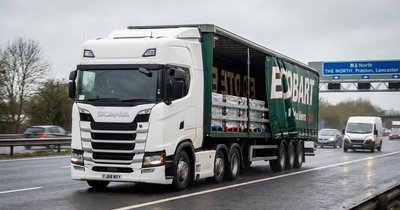
Palletised commercial goods moved in standard curtain-sided or box trailers, maximum 44 tonnes and 16.5 metres in length. This is the supply chain that keeps supermarket shelves stocked and warehouses full. Unless you are a business shipping pallets, general haulage is not what you need.
Vehicle haulage
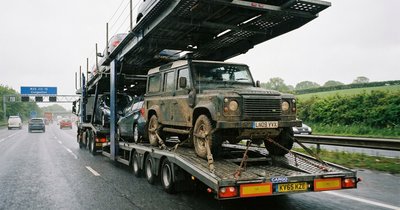
Car transport, van transport, motorcycle transport, and motorhome moves all fall under vehicle haulage. Open car transporters carry six to ten vehicles at a time and are the standard choice for most jobs. Enclosed transporters carry one to three vehicles and cost more, but they protect the load from road debris, weather, and prying eyes.
The most common use cases are straightforward. You bought a car from a seller in Glasgow and you live in Kent. You are relocating and need your second car moved. You have a classic Jaguar E-Type that needs enclosed transport to an auction. A dealer needs twenty cars moved from a port to showrooms across the Midlands.
The key question is open versus enclosed. Open transport is cheaper and fine for any standard vehicle. Enclosed is worth the premium for classics, supercars, or anything worth more than the transport cost by a wide margin. If you would not park it on a public street overnight, use enclosed.
Caravan haulage
Static caravans and touring caravans are different jobs entirely. Static caravans are wide loads, typically 3.5 to 4.5 metres across, and require specialist low-loader trailers, wide-load permits, and often crane hire at the destination site for placement. This is not something a general haulier can do. The equipment, the permits, and the site access knowledge are all specialist.
Touring caravans are more straightforward. A purpose-built towing vehicle can handle the job, and permits are rarely needed. But even here, you want a caravan transport specialist rather than a generalist, because they understand the weight distribution, the towing limits, and the site access requirements that catch amateurs out.
The most expensive mistake in caravan haulage is calling a general haulier for a static caravan move. They will either refuse the job outright or sub-contract it to a specialist and add their own margin on top. Go direct to the right company from the start.
Boat and marine haulage
Sailboats, motorboats, yachts, and jet skis all need purpose-built boat trailers or cradles for road transport. Taller vessels need the mast removed or lowered before transport. Wider boats may trigger wide-load permit requirements depending on the beam width.
Boat transport is sourced almost exclusively through specialist marine hauliers rather than general operators. The rigging knowledge, the cradle fitting, and the marina access experience are all niche skills that a general lorry driver does not have. If you need a boat moved, start with a marine transport specialist.
Plant haulage
Excavators, bulldozers, forklifts, cranes, tipping dumpers. Low-loaders and step-frame trailers accommodate the height and weight of construction machinery. Many plant loads require abnormal load permits due to their dimensions. If you are hiring a digger for a building project, the plant hire company usually arranges the haulage. If you own the equipment and need it moved, you need a plant haulage specialist with the right trailer.
Heavy haulage
Loads that exceed standard legal weight or dimension limits need heavy haulage. The thresholds are over 44 tonnes or dimensions beyond 2.55 metres wide. Heavy haulage operators use reinforced trailers, multi-axle configurations, and specialist lashing equipment to handle industrial machinery, large fabricated steel structures, and transformers. Operators need permits from National Highways and must plan routes around low bridges, weight-restricted roads, and tight junctions.
Abnormal load haulage
Where heavy haulage handles overweight loads, abnormal load haulage is about extreme dimensions. Loads over 3 metres wide, over 18.65 metres long, or over 80 tonnes require notification to National Highways and may need police escorts, advance route surveys, and coordination with utility companies to move overhead cables. Wind turbine blades, bridge sections, and large prefabricated structures fall into this category. Operators need STGO (Special Types General Order) certification, and the heaviest loads require a VSO (Vehicle Special Order). Neither heavy haulage nor abnormal load haulage is a consumer service, but if your job crosses these thresholds, you will need a specialist who holds the right permits.
Refrigerated haulage
Temperature-controlled transport using refrigerated trailers, known in the industry as reefers. Frozen goods travel below -18°C, chilled goods between 0°C and 8°C. Maximum weight is the standard 44 tonnes. This serves the food, pharmaceutical, and chemical industries. Unless you are shipping perishable goods commercially, you will never need this.
Hazardous goods haulage (ADR)
The transport of explosives, flammable liquids, gases, corrosives, and radioactive materials. Both the operator and the driver need specialist ADR certification, and vehicles must carry hazard warning placards. If your goods are hazardous, the operator will identify this during the booking process and handle the compliance requirements. This is not something you need to self-select.
Waste haulage
Moving solid or liquid waste requires a Waste Carrier Licence from the Environment Agency in addition to a standard operator’s licence. Strict legal requirements govern the movement, documentation, and disposal of waste. If you are clearing a site and need waste removed, the disposal company will typically handle haulage as part of the service.
Which Type of Haulage Do You Need?
Knowing the types is useful background. But the practical question is simpler: what are you moving, and which type of operator should you call?
Moving a car (any condition). Vehicle haulage. Open transporter for standard vehicles, enclosed for classics, luxury cars, or anything high-value. Get at least three quotes. Prices vary significantly between operators, especially when one has a return load on your route.
For a motorhome or large van, vehicle haulage or a flat-bed will work, but confirm the operator has experience with large wheelbases. Not every car transporter can handle a 7-metre motorhome.
Motorcycles typically cost less than car transport. Some operators specialise in bikes and use dedicated motorcycle cradles rather than strapping wheels to a flat-bed.
Static caravans are a different story. You need a caravan haulage specialist, full stop. Wide-load permits are mandatory, crane hire is usually needed at the destination, and a 4-metre-wide caravan will not fit through a standard park entrance without planning. A general haulier will either refuse or sub-contract at a markup.
Moving a touring caravan. Caravan haulage or a specialist towing service. Simpler than a static move, but you still want someone who knows the towing limits and the site access requirements.
Boats and yachts go to a marine or boat haulage specialist. Check beam width against road permit requirements. Mast removal is almost always required for sailboats. For jet skis and small dinghies, some vehicle transporters can handle the job on a standard trailer, but a dedicated boat transport company will have the right cradle and tie-down setup.
Plant machinery. Plant haulage on a low-loader. Confirm maximum height at the destination, including bridges and overhead cables on the access route.
Anything with unusual dimensions goes to a heavy or abnormal load haulage specialist. The operator handles the permits and route planning.
Most people assume any haulage company can move anything. They cannot. Calling a general haulier to move a static caravan will get you a referral, a delay, and a markup when the specialist who actually does the job charges the general haulier, who then charges you. Go direct to the right type from the start.
How Haulage Is Priced
Distance is the primary driver. Most operators quote per mile or per trip, with longer journeys costing more in total but less per mile.
Load weight and size determine which vehicle is needed. A standard car on an open transporter costs less than a static caravan on a low-loader with a wide-load escort, because the equipment, permits, and crew are all different. Fuel surcharges are common on top of the base rate, and permits or police escorts for abnormal loads add further cost.
Return loads are the single biggest variable in haulage pricing. If a transporter has just delivered a car from London to Manchester and needs to drive back south, they will quote aggressively on a job heading that direction. The alternative is driving back empty, earning nothing. This is why two operators quoting on the same job can differ by hundreds of pounds. One has a return load. The other does not.
Timing matters too. A job booked two weeks out will be cheaper than one needed tomorrow, because the operator can plan it into an existing route. Caravans and boats peak in spring and summer; general freight peaks in Q4 around Christmas. Booking outside peak periods can mean lower prices and more availability.
Indicative ranges to set your expectations: car transport across the UK typically runs £0.50 to £1.50 per mile. Static caravan transport costs £500 to £3,000 or more depending on distance and site access. Vehicle transport over 100 to 300 miles usually falls between £150 and £600. These figures are drawn from industry sources and operator quotes, and they vary by route, operator, and timing, but they give you a benchmark to judge whether a quote is reasonable.
The fragmentation of 57,000 operators means price variation for the same job is enormous. The rational response is to get multiple quotes rather than accepting the first number you hear.
What to Check Before You Book a Haulage Company
Operator’s licence. Any vehicle over 3.5 tonnes carrying goods for hire or reward must hold an operator’s licence (O-licence) from the DVSA. There are three types: Restricted (own goods only), Standard National (third-party goods within the UK), and Standard International. For domestic consumer jobs, Standard National is the one that matters. You can verify any operator on the DVSA public register.
Insurance. Ask specifically about goods in transit insurance and public liability cover. Standard motor insurance does not cover the load on the trailer. You need to know the coverage limit and whether it is adequate for the value of your item. For high-value loads, consider arranging your own additional cover.
Experience with your load type. A general haulier is not a specialist. Ask how many static caravans, boats, or classic cars they have moved in the past year. If the answer is vague, keep looking. Operators who do your type of job regularly will have the right equipment, the right insurance, and the right approach to handling and securing the load.
Reviews. Check Google and Trustpilot. Established operators will have a track record you can verify. One-person operations with no reviews are a higher risk. Factor that into your decision alongside the quote price.
If your load is hazardous or involves waste, the operator will need ADR certification or a Waste Carrier Licence. They should raise this proactively during the booking process.
How to Find a Haulage Company UK: Getting Competitive Quotes
The traditional approach to finding a haulage company is to search Google for something like “car transport company near me” or “static caravan haulage,” call three to five companies, explain your job each time, and compare whatever formats of quotes come back. It works, but it takes hours and you are limited to whichever companies happen to rank well in your area.
The problem with this approach is that most haulage companies specialise by geography and load type. You cannot easily identify which operators serve your specific route and specialise in your item type just from a Google search. The company with the best SEO is not necessarily the one with a lorry heading your direction next Tuesday.
Quote marketplaces solve this. You post the job once with exact details and operators who already work that route and specialise in your load type see the job and submit competing quotes. The competitive dynamic works in your favour: transporters with return loads bid lower because they are filling truck space that would otherwise earn nothing.
When posting a job, include:
- Exact pickup and delivery postcodes
- Type and dimensions (or weight) of what you are moving
- Preferred dates and any flexibility
- Special requirements: enclosed transport, crane hire at destination, wide-load permits
The more detail you give, the more accurate the quotes.
Post your job on TransportQuoteCompare. Describe what you need moved, where it is, and where it needs to go. Verified transport companies across the UK compete for the work. You compare quotes, check reviews, and pick the operator that fits your job and your budget. Free to post, no obligation to accept. See how TransportQuoteCompare works.
The Shortcut to Getting This Right
The person who calls one company and accepts the first quote will overpay compared to someone who understands the market structure and gets competing offers from the right type of specialist.
If you are ready to move a vehicle, caravan, or boat, post your job on TransportQuoteCompare and get competing quotes from verified transport companies. Free to post, no obligation, and you will see exactly how much the market varies for your specific route.
Need a Transport Quote?
Compare quotes from verified UK transporters. Free and takes under 2 minutes.
Get Free Quotes