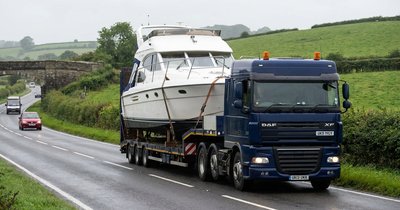
Boat Transport UK: Costs, Logistics & What to Expect
Key takeaways
- UK boat transport costs £1.00–£6.00+ per mile depending on boat size, with additional costs for crane lifts, permits, and escorts.
- Boats wider than 2.9 metres on the trailer are classified as wide loads, requiring police notification and potentially escort vehicles.
- Haulier insurance typically covers only £1,300 per tonne — far below most boats’ market value. Arrange separate marine transit insurance.
- Preparation (mast removal, tank draining, cradle inspection) is the owner’s responsibility. Failing to prepare means delays and extra charges.
- Comparing quotes from multiple transporters typically saves 20–40%, especially when a transporter has a backhaul load on your route.
You have just bought a 28-foot sailboat from a seller in Plymouth and you need it in Ipswich. Or your marina is closing for redevelopment and your cruiser needs to be at a new berth by next month. Either way, you are now trying to answer a question that barely anyone on the internet has bothered to answer properly: how much does boat transport in the UK actually cost, and how does the whole process work?
Most boat owners call one haulier, get a number, and have nothing to compare it against. The UK boat transport market is dominated by small regional operators who do not publish prices. The top Google results are service pages from individual companies, not guides. Nobody has laid out the costs by boat size, explained the wide-load permit process, or warned you about the insurance gap that could leave you tens of thousands of pounds short if something goes wrong.
This guide covers all of it. Three transport methods, real per-mile costs by boat size, the regulations that affect price, a preparation checklist that prevents delays, and the insurance issue that most boat owners only discover after it is too late.
Three ways to move a boat in the UK
Before you request quotes for boat transport, you need to understand which method suits your situation. The choice affects cost, timeline, and risk. Unlike car transport, where you are choosing between trailer types, boat transport involves fundamentally different methods with different trade-offs.
Road haulage
The most common method for UK boat transport. Your boat is lifted by crane onto a specialist low-loader trailer or cradle and driven by road to the destination. This works for everything from 12-foot dinghies to 40-foot yachts, though larger boats introduce wide-load regulations that add cost and complexity.
Road haulage is predictable. Journey times are measured in hours, not days. Weather rarely causes delays. And the boat arrives with zero engine hours or sail wear. The trade-off is cost: specialist trailers, crane hire at both ends, and potentially wide-load permits and escort vehicles for beamier boats.
Sailing delivery
A professional skipper sails your boat from one port to another. This only works for seaworthy vessels with a functioning engine and sails. It is typically cheaper per mile than road haulage for larger boats, but the timeline is weather-dependent. A coastal passage from Southampton to Falmouth might take two days in fair weather or two weeks if low-pressure systems keep stacking up.
You also accumulate engine hours and sail wear. For a boat you plan to sell, that matters. For a boat you plan to cruise, it matters less. Sailing delivery makes most sense for vessels over 30 feet on coastal or cross-Channel routes where road haulage becomes expensive due to wide-load requirements.
Sea freight and container shipping
For international moves or very large vessels that cannot travel by road. The boat is either loaded into a shipping container (small boats and tenders) or shipped as deck cargo on a ro-ro or heavy-lift vessel. This is specialist territory with specialist pricing. For domestic UK moves, road haulage is almost always the better option.
| Factor | Road haulage | Sailing delivery | Sea freight |
|---|---|---|---|
| Speed | 1–2 days | 2–7 days (weather dependent) | 1–4 weeks |
| Cost (relative) | Higher for large boats | Lower for large boats | Highest |
| Boat condition | No engine hours or sail wear | Adds engine hours and wear | No wear |
| Weather dependency | Minimal | High | Moderate |
| Suitable for | All boats, including non-seaworthy | Seaworthy vessels only | International or oversized |
How much does boat transport cost in the UK?
Boat transport pricing in the UK follows a per-mile model, with the rate driven primarily by the size and beam of the boat. Larger boats cost more per mile because they require specialist trailers, heavier lifting equipment, and potentially wide-load permits and escort vehicles.
Per-mile rates by boat size
| Boat size | Typical per-mile cost | Examples |
|---|---|---|
| Under 20 ft | £1.00–£2.50 | Dinghies, jet skis, small motorboats, tenders |
| 20–30 ft | £2.50–£3.50 | Day cruisers, small sailboats, RIBs |
| 30–40 ft | £3.50–£4.00 | Cruising yachts, large motorboats |
| Over 40 ft | £4.00–£6.00+ | Yachts, superyachts |
These are base rates for the road journey itself. They do not include crane lifts, permits, or escort vehicles, which can add £300 to £1,000+ to the total depending on the boat and route.
A note on narrow boats. Canal narrow boats present a different challenge. At 6 feet 10 inches (2.08 m) wide, they fit comfortably within standard-load width limits. But at 30 to 70 feet long, they require specialist low-loaders and often exceed standard length restrictions. Expect narrow boat transport to cost £2.00–£4.00 per mile, with the price driven more by length and weight than by beam.
Sample journey costs
| Route | Distance | Under 20 ft | 20–30 ft | 30–40 ft |
|---|---|---|---|---|
| Southampton to London | ~80 miles | £120–£200 | £250–£350 | £400–£550 |
| Plymouth to Bristol | ~120 miles | £180–£280 | £350–£500 | £550–£750 |
| Liverpool to Newcastle | ~170 miles | £200–£300 | £450–£650 | £700–£950 |
| Southampton to Edinburgh | ~450 miles | £550–£750 | £1,100–£1,500 | £1,800–£2,500 |
Additional costs to budget for
- Crane hire: £200–£500+ per lift. You typically need two lifts (loading and unloading), so budget £400–£1,000 for the pair.
- Wide-load permits: £50–£150 per journey for police notification and highway authority permits.
- Escort vehicles: £200–£400 per day, required for boats with a beam over 3.5 metres.
- Mast removal: £100–£300 if a boatyard handles it. Free if you do it yourself, but you need the right skills and equipment.
- Seasonal premium: Summer (April to September) is peak season. Expect prices 10–20% higher than winter rates.
The backhaul discount. Transporters who have just delivered a boat and are heading back empty will often discount significantly, sometimes 20–40% below standard rates. This is the structural advantage of using a comparison platform: you are more likely to find a transporter who already has a return journey planned on your route.
What affects the price of boat transport?
The per-mile rate is the starting point, but six factors can push the total cost significantly higher or lower.
Boat dimensions. Length matters, but beam (width) matters more. A narrow 35-foot boat might travel as a standard load. A wide-beam 25-footer could trigger wide-load requirements. Height is the third dimension: a sailboat with the mast up will not fit under most bridges, so mast removal is essential.
Weight and keel type. A fin-keeled yacht is heavier and harder to cradle than a bilge-keeled boat of the same length. Weight affects trailer requirements, crane capacity needed, and ultimately price.
Wide-load status. Any boat with a beam exceeding 2.9 metres (9 feet 6 inches) is classified as a wide load. This triggers police notification requirements, potential escort vehicles, and route restrictions. The permit process adds cost and lead time. More on this below.
Access at collection and delivery. A marina with a travel hoist and good road access is straightforward. A boat on a private mooring up a single-track lane with no crane access is not. Difficult access can add hours of labour and specialist equipment to the job.
Distance and route complexity. Longer journeys cost more in absolute terms but less per mile. Routes through urban areas, weight-restricted bridges, or areas with low clearances may require detours that add time and fuel cost.
Time of year. The spring launch season (March to May) and autumn lift-out (September to November) are the busiest periods for boat hauliers. Winter (December to February) tends to be quieter, and some transporters offer lower rates to keep their trucks moving. If your move is not time-critical, booking for the off-season can save 10–20%. Autumn lift-out to winter hard standing is a particularly good time to get competitive quotes, as many transporters are running regular marina-to-boatyard routes and can offer backhaul pricing.
Wide-load regulations for boat transport in the UK
If your boat has a beam wider than 2.9 metres, it is legally classified as an abnormal load for road transport purposes. This is one of the most misunderstood aspects of UK boat transport, and the costs associated with it are often a surprise.
| Total width on trailer | Requirement | Lead time |
|---|---|---|
| Under 2.9 m | No special requirements | None |
| 2.9–3.5 m | Police notification (each county on route) | 2 working days |
| 3.5–5.0 m | Police notification + possible escort vehicle | 2–5 working days |
| 5.0–6.1 m | VR1 Highway Authority Permit | ~1 week |
| Over 6.1 m | Special Order BE16 Authorisation | 2+ weeks |
Your transporter handles the permits and notifications. You do not need to apply yourself. But you should understand what is involved because it directly affects the price and the timeline. A 30-foot yacht with a 3.2-metre beam needs police notification in every county along the route, with two working days’ notice. That means your transporter cannot do same-day or next-day collection for wide boats.
The notification process uses ESDAL (Electronic Service Delivery for Abnormal Loads), which automatically notifies police forces, highway authorities, and bridge owners along the planned route. Wide loads may also be restricted to daylight hours and banned during peak traffic periods, which can mean the journey takes longer or needs an overnight stop.
The practical takeaway: if your boat is under 2.9 metres wide on the trailer, transport is simpler, faster, and cheaper. If it is over, factor in permit costs (£50–£150), potential escort vehicle charges (£200–£400/day), and at least a week of lead time for booking.
How to prepare your boat for road transport
Preparation is your responsibility, not the transporter’s. If the boat is not ready when the truck arrives, you will be charged waiting time (£50–£100 per hour) and the driver may refuse to load until the work is done. Every reputable boat transporter will tell you the same thing: the owner prepares the boat before transport day.
Sailboats: mast and rigging
- Un-step the mast and de-rig it completely. Remove all spreaders, radar dome, lights, wind instruments, antennas, and VHF aerials.
- Remove all standing and running rigging from the mast. Bind cables tightly to the mast pole with tape or cable ties.
- Coil halyards at the mast base. Do not leave them dangling.
- The mast travels on the trailer bed in a designated space. Do not secure it to the boat’s deck.
- Remove or lower booms, spinnaker poles, and whisker poles. Stow them below deck or secure them flat on deck.
All boats: deck and hull
- Remove or fold down biminis, dodgers, radar arches, and any equipment that adds height.
- Remove lifelines, stanchions, and bow/stern pulpits if they make the boat wider or taller than necessary.
- Secure all hatches, portholes, and doors. Tape them if needed.
- Disconnect shore power and isolate batteries.
- Drain water tanks to the minimum. Reduce fuel to a safe minimum. Less weight equals easier (and cheaper) transport.
- Secure or remove everything loose below deck. If it can move, it will.
Cradle and trailer
- If you are providing the cradle, inspect it carefully. Check for loose bolts, cracks, and structural weakness. If the cradle fails in transit, the carrier will not accept responsibility for damage.
- Check trailer tyres for wear, dry rot, and correct inflation pressure.
- Ensure the cradle fits the hull properly. A poorly fitting cradle puts point loads on the hull that can cause damage over a long journey.
Before the truck arrives
Photograph the boat from every angle. Close-ups of any existing marks, scratches, or damage. Date-stamped photographs are your evidence if you need to make an insurance claim after transit. This takes ten minutes and could save you thousands.
The insurance gap most boat owners miss
This is the section that could save you real money. Most boat owners assume their haulier’s insurance covers the full value of the boat during transit. It does not.
UK hauliers carry liability insurance under standard RHA (Road Haulage Association) Conditions of Carriage. Under these terms, their liability is capped at £1,300 per tonne of cargo. That cap applies regardless of the actual value of your boat.
Here is what that means in practice. A 5-tonne sailing yacht worth £50,000 is covered for just £6,500 under standard RHA terms. A 2-tonne motorboat worth £30,000 is covered for £2,600. If the boat is damaged or destroyed during transport, the haulier’s liability insurance pays out the RHA rate, not the market value. The gap between the two is your problem.
The solution: marine transit insurance. This is a standalone policy that covers your boat during loading, road transit, and unloading. It covers the declared value of the vessel, not a per-tonne rate. The cost is typically 0.5–1.5% of the boat’s declared value. For a £30,000 boat, that is £150–£450 for a single journey. Specialist marine insurers like Insurance2day and Alan Boswell offer transit policies.
Before you book any boat transport, check three things:
- What is the transporter’s Goods in Transit insurance limit? Is it adequate for your boat’s value?
- Does your existing boat insurance cover road transit? Many marine policies exclude it.
- For any boat worth over £10,000, get a standalone marine transit policy. The cost relative to the asset value is negligible.
How to compare boat transport quotes in the UK
The worst way to find a boat transporter is to call the first Google result and accept whatever they quote. With no reference point, you have no way to know if the price is fair, the insurance is adequate, or the company has experience with your type of boat.
The second-worst way is to call four or five companies one by one. Different quote formats, different inclusions, different timelines. By the fourth call you have forgotten what the first company said. You end up choosing on gut feel.
A comparison platform fixes both problems. You describe your boat and route once. Multiple verified transporters see the job and compete for the work. You compare quotes, insurance details, reviews, and experience side by side. The competitive dynamic typically drives prices down because transporters bid for backhaul loads and fill truck space that would otherwise earn them nothing.
When comparing transport quotes, look beyond the headline number:
- Total price. Does it include crane lifts at both ends? Permit costs? Or are those extras?
- Insurance limit. The coverage amount, not just “yes, we’re insured.”
- Collection and delivery window. A specific date is not the same as “within 14 days.”
- Boat type experience. A company that hauls narrow boats every week may have no experience with deep-keeled yachts. Ask.
- Cradle provision. Does the transporter provide one, or do you need your own?
The comparison process also surfaces quality signals. A transporter with 50 five-star reviews and photographs of previous boat moves is easier to trust than an anonymous quote with no track record. When you see five quotes side by side, the outliers become obvious.
Your next step: compare, don’t guess
You do not need to memorise all of this. You need to apply it once, for the boat you are moving right now.
Post your job on TransportQuoteCompare. Describe your boat, the collection point, and the destination. Verified boat transport companies across the UK compete for the work. You compare quotes, profiles, and insurance details side by side, then choose the transporter that fits your requirements and your budget.
No phone calls. No repeating yourself. No guessing whether the price you were given is fair.
Need a Transport Quote?
Compare quotes from verified UK transporters. Free and takes under 2 minutes.
Get Free Quotes