Vehicle Transport Cost: The Complete UK Pricing Breakdown
Most UK vehicle transport cost guides give you a number for a standard saloon and call it done. If you’re moving a motorcycle, a static caravan, or a boat, that number is useless.
Vehicle transport costs in the UK vary enormously depending on what you’re moving. A car from London to Manchester sits in a completely different cost bracket to a static caravan making the same journey. A motorcycle heading 100 miles costs more per mile than a saloon covering 500 miles. And for boats and yachts, no reliable published price table even exists.
This guide covers all five vehicle types with real per-mile rates and distance-based pricing. It also explains how the way you book affects the cost of vehicle transport just as much as what you’re booking.
UK Vehicle Transport Costs at a Glance
Before the detail, here’s the summary. This table covers indicative costs for a standard vehicle in each category, based on distance. Use it as your starting reference, then read the sections below for the full picture.
| Vehicle Type | 100 miles | 200 miles | 300 miles | 500 miles |
|---|---|---|---|---|
| Car (standard saloon) | £100–£200 | £150–£350 | £200–£450 | £280–£600 |
| Motorcycle | £200–£350 | £300–£500 | £400–£650 | Quote required |
| Static caravan | From a few hundred | £500–£1,000+ | £800–£1,500+ | Quote required |
| Boat / yacht | No published table exists. Real quotes required. | |||
| Motorhome | No published table exists. Expect similar to large vehicle/caravan rates. | |||
These are indicative ranges. Your actual quote will vary by route, timing, vehicle condition, and transport method. For context, the average UK haulage rate sits at roughly £1.65 per mile in 2025, and transport costs across the UK have risen 36.2% since 2015 according to ONS data via Statista.
Here’s what drives those numbers, starting with the most common job: moving a car.
Car Transport Costs UK
Car transport follows a predictable per-mile rate structure. The cost per mile drops as the distance increases, because fixed costs (driver time, admin, fuel for the empty return leg) get spread over more miles.
Here’s how car transport costs per mile break down across UK distances:
| Distance | Per-Mile Rate | Typical Total |
|---|---|---|
| Under 50 miles | £2.00–£4.00 | £80–£200 |
| 50–200 miles | £1.30–£2.00 | £100–£350 |
| 200–300 miles | £0.95–£1.30 | £200–£450 |
| Over 300 miles | £0.60–£0.95 | £280–£600 |
A 500-mile run from London to Edinburgh typically falls in the £280–£600 range for a standard saloon on an open trailer.
Three transport methods and when each makes sense
Driven on trade plates. A professional driver collects your car and drives it to the destination. This is usually the cheapest option, but it adds mileage to the vehicle. The car must have a valid MOT and be in roadworthy condition.
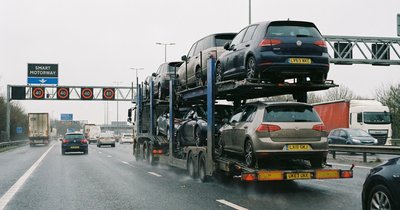
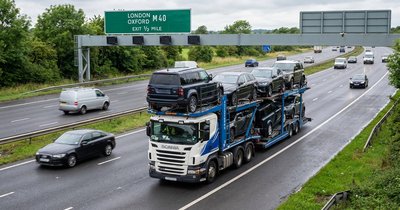
Open trailer. The most common method. Your car is loaded onto a multi-car carrier and secured for transit. Cost-efficient and suitable for most vehicles. The car is exposed to weather and road spray during the journey, but for a standard road car this is perfectly fine.
Enclosed trailer. The vehicle travels inside a fully sealed trailer. Based on US market data, this typically adds a 45–65% premium over open transport. UK premiums vary but expect a significant uplift. It is worth the extra cost for classic cars, luxury vehicles, or anything with sentimental value that justifies the protection.
One more cost to be aware of: if your car is non-running, expect a surcharge of £50–£150 for winching it onto the carrier. Always disclose the vehicle’s condition upfront. Surprising the transporter on collection day helps nobody.
Cars follow a fairly predictable cost model. Other vehicle types are less predictable, and that’s where most price guides fall apart.
Motorcycle, Caravan, Boat, and Motorhome Transport Costs
Cars get all the attention in transport pricing guides. But if you’re moving a motorcycle, a caravan, a boat, or a motorhome, the cost structure is completely different. Here’s what each one actually looks like.
Motorcycles
Motorcycle transport costs more per mile than car transport. Fewer carriers specialise in bikes, and specialist loading equipment is required.
For short hauls under 50 miles, expect £3.00–£5.00 per mile. On longer routes above 50 miles, rates drop to around £2.00–£3.00 per mile, with an average of roughly £2.50 per mile.
You have three method choices. Open trailer is the most affordable. Enclosed trailer adds a moderate premium but keeps the bike fully protected. Ride-away service, where a driver rides the motorcycle to the destination, is typically the most expensive option.
One advantage of using a marketplace for motorcycle transport: competition between carriers on popular routes can push per-mile costs down significantly below those headline rates.
Caravans
Caravan transport splits into two completely different operations, and the cost difference reflects that.
Touring caravans are towed by a professional driver using a suitable tow vehicle. The logistics are relatively straightforward and similar to a large vehicle move. The caravan must be road-legal and in towable condition.
Static caravans are a different proposition entirely. They require a flatbed lorry, specialist crane equipment for lifting, and potentially wide-load permits and escort vehicles depending on dimensions. Site access surveys may be needed before the move can even be quoted. The logistics are complex and the costs reflect it.
Static caravan transport starts from a few hundred pounds for short, simple moves and can reach £1,500 or more for long-distance or complex lifts. No reliable published price table exists for static caravans. The variables (access, dimensions, route restrictions, crane requirements) make every job different. Real quotes are the only reliable source of pricing.
Boats and yachts
For domestic UK moves, boat transport is typically done by road. The vessel is secured on a purpose-built trailer or cradle. Larger boats require wide-load permits, and sailing yachts need the mast taken down. Oversized loads may need escort vehicles for the journey.
No widely published UK price table exists for boat or yacht transport. This part of the market is poorly served for pricing information, which is exactly why real quotes matter here more than anywhere else. Boat transport costs significantly more than car transport due to specialist equipment, permits, and detailed route planning. The only way to get a real number is to describe your vessel and get quotes.
Motorhomes
No published UK price data exists for motorhome transport specifically. In practice, a drivable motorhome in roadworthy condition can be moved the same way as a car: a professional driver collects it and drives it to the destination on trade plates. This is usually the cheapest option.
Larger motorhomes that need a flatbed are priced more like static caravans, where size, weight, and route restrictions drive the cost. A compact campervan on a short run might cost a few hundred pounds. A 10-metre A-class motorhome on a cross-country move will cost significantly more due to the specialist equipment required. As with boats, real quotes are the only way to get a reliable number.
What Affects Your Vehicle Transport Quote
Distance is the primary cost driver, but not in the way most people expect. Short distances are expensive per mile because the transporter’s fixed costs (driver time, fuel for the empty return, admin) get compressed into fewer miles. A 50-mile job might cost £4.00 per mile. A 500-mile job drops below £1.00 per mile, even though the total bill is higher.
After distance, the biggest factors are your vehicle’s size and condition. SUVs and motorhomes take up more carrier space and burn more fuel to haul. Non-running vehicles need winching onto the carrier, which typically adds £50–£150 to the bill. Always mention this when requesting quotes rather than springing it on the driver at collection.
Choosing between open and enclosed transport creates a significant price gap. Enclosed trailers carry a substantial premium over open carriers. For a standard road car, open is the right call. For a classic, a prestige vehicle, or anything irreplaceable, enclosed protection is worth the extra cost.
The factor most people overlook is timing. Peak demand runs May to August and again over December holidays. If you can flex your collection date by 3–5 days and book one to two weeks ahead, transporters can slot you into backload space on return journeys. These backload rates are consistently the cheapest way to move any vehicle, because the transporter is filling space that would otherwise earn nothing. Busy corridors like London to Manchester attract more carriers and sharper pricing. Remote routes cost more because fewer transporters run them.
The single biggest controllable factor most people ignore is timing flexibility. Book one to two weeks out with a flexible collection window and you will almost always get a better price than booking urgently for a fixed date. That one change can save more than any amount of haggling over the rate itself.
Once you understand the cost drivers, the most impactful decision left is how you book. Most people default to the most expensive option without realising it.
Direct Booking vs Marketplace: Why How You Book Changes the Price
When you call a single transport company directly, they give you their rate. There is no competition, no incentive for them to sharpen the price, and no way for you to know whether that number is fair without making several more phone calls.
A marketplace works differently. You post one job describing your vehicle and route. Multiple transporters see it and compete to win the work. Transporters compete for your job, which pushes prices down and reveals what the market rate actually is for your specific move.
| Booking Method | Pricing | Pros | Cons |
|---|---|---|---|
| Direct booking | Full rate | Dedicated service, direct relationship | Higher price, no competition |
| Marketplace | Up to 75% off quoted rate | Competitive pricing, multiple options | Requires waiting for quotes |
The “up to 75% saving” figure comes from Shiply’s published data on competitive bidding across their marketplace. The mechanism behind it is straightforward: transporters who are already travelling a route can fill empty space on their carrier at heavily discounted backload rates. Those rates never appear on a direct-booking price list because no single company will voluntarily undercut their own standard pricing.
For any vehicle type, any distance, getting three or more quotes from competing transporters is always better than accepting the first price offered. The only reason to book direct without comparing is if you already have an existing relationship with a trusted transporter and you know their price is fair.
Get Your Vehicle Transport Quotes
You now know what your vehicle type typically costs to move, what drives the price up or down, and why comparing quotes from competing transporters consistently delivers a better price than calling one company.
Post your job on TransportQuoteCompare, describe your vehicle and route once, and let verified UK transporters compete for the work. The whole process takes under two minutes. You compare quotes, check transporter profiles and insurance details, and choose the one that fits your requirements and your budget.
No phone calls. No repeating yourself to five different companies. No guessing whether the first price you were given was fair.
Have your vehicle details, collection postcode, and delivery postcode ready. That’s all you need to get started. Moving a car specifically? Our car delivery service guide covers the options and booking process in detail.
Need a Transport Quote?
Compare quotes from verified UK transporters. Free and takes under 2 minutes.
Get Free Quotes