Motorcycle Transport UK: How to Ship Your Bike Safely
You’ve found the perfect bike. Right model, right colour, right price. The only problem is it’s sitting in a garage 200 miles away and the seller can’t deliver. That’s when most people discover they know almost nothing about motorcycle transport in the UK.
The search results are not much help. You get a wall of quote forms from single operators, each telling you they’re the best, none explaining what the process actually involves. This guide is different. It covers every decision you need to make: the right transport method for your bike, what it should cost, how to prepare before handover, the insurance gap that catches most owners out, and how to tell a good transporter from a bad one. No sales pitch for a single company. Just the information you need to get your motorbike transport sorted safely.
When Do You Need Motorcycle Transport?
Most jobs fall into three categories: online purchases, non-runners, and relocations. Beyond those, there are niche needs like track day logistics and classic bike shows.
Online purchases are the biggest single driver. You find a Triumph Bonneville on eBay from a seller in Leeds, or a clean CBR on AutoTrader from someone in Plymouth, and now you need it shipped to your door. The UK registered 112,649 new motorcycles in 2024 (MCIA data), and even after a 19% dip in 2025, over 90,000 bikes still entered the market. That volume means transport demand is constant, and so is the supply of operators competing for work.
Non-runners are the second most common reason. A seized engine, a post-accident frame, a project bike bought at auction. These can’t be ridden onto a trailer, which means specialist loading equipment and a higher price. If your bike doesn’t start, mention this upfront when requesting quotes.
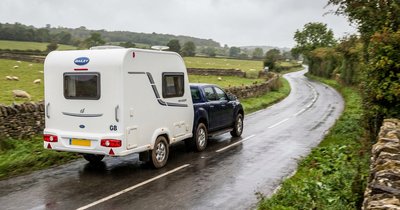
Then there’s relocation. Moving house from London to the Midlands with a bike you can’t ride because it’s SORN, or shipping overseas as part of a bigger move. If you’re also moving a caravan, the logistics multiply quickly.
Track day riders ship bikes to circuits in advance rather than towing on the day. Classic and collector bike owners want enclosed transport with careful handling, not an open trailer behind a Transit. And auction purchases come with fixed collection dates that don’t wait for you to arrange a mate with a van.
Types of Motorcycle Transport in the UK
This is the first real decision, and it matters more than most people realise. There are four methods used in the UK, and they are not equally suitable for every job.
Enclosed van transport
The standard professional method. Your bike is loaded into a specialist van fitted with front-wheel chocks and soft-tie ratchet straps. No metal-on-metal contact, no weather exposure, no road spray. This is the right choice for the majority of domestic motorcycle transport jobs, and the only sensible option for sports bikes, high-value machines, or anything you care about keeping in the condition it left. Most enclosed van jobs cost between £100 and £350 for typical UK distances, depending on route length.
Open trailer
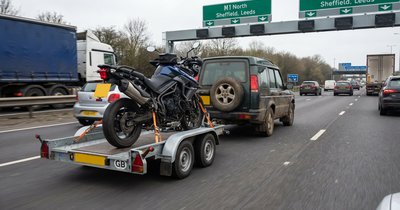
Cheaper than enclosed, but the bike is exposed to weather, road debris, and spray for the entire journey. Fine for a short local move on a standard commuter, where you might pay £50 to £120. Not recommended for sports bikes, classics, or anything with paintwork you want to keep pristine. If you’re moving a daily rider 30 miles across town, open trailer does the job. Beyond that, the savings rarely justify the risk.
Crated or palletised shipping
The bike is secured to a custom pallet and enclosed in a wooden crate before loading. Maximum protection. This method is primarily used for overseas shipping or very high-value, rare machines. For a standard domestic UK move, crating is unnecessary and the cost reflects that. You’ll only need this if you’re shipping internationally or transporting something genuinely irreplaceable.
Ride-away
A transport professional rides the bike to its destination. This adds mileage, adds wear, and requires the rider to hold the correct licence category for your machine. It is not suitable for non-runners, uninsured bikes, or high-value motorcycles. Always verify the rider’s licence category before agreeing. Ride-away should be a last resort, not a first choice.
For most domestic UK moves, enclosed van transport is the right answer. Be direct with yourself about what your bike needs and don’t default to the cheapest option without understanding the trade-offs. The car transport market works on the same principles, but motorcycle-specific equipment (wheel chocks, soft-loop straps) is non-negotiable.
How Much Does Motorcycle Transport Cost in the UK?
The range is wider than most people expect, and the price you pay depends heavily on distance and method.
Short distances under 50 miles cost £3.00 to £5.00 per mile when booking a single operator directly (Clicktrans 2025/2026 data). That per-mile rate falls on longer runs: expect £2.00 to £3.00 per mile beyond 50 miles, averaging £2.50. On competitive marketplace platforms, the picture changes. Clicktrans reports an average cost of £54 for trips up to 200 miles, reflecting the price compression that happens when multiple transporters bid on the same job.
Marketplace platforms tell an even sharper story. On Shiply, the average motorcycle transport quote comes in around £0.55 per mile, starting from £34. That gap between marketplace and direct pricing is not a mistake. It reflects the competitive bidding pressure that platforms create: multiple transporters quoting on the same job, often filling return-leg capacity that would otherwise earn them nothing.
Several factors push the price up. Non-runners need specialist loading equipment and more handling time. Fixed-date urgent moves cost more than flexible ones. Large or unusual bikes, trikes, or big adventure tourers may need specialist kit. Restricted access at pickup or delivery adds time.
What brings the price down is straightforward: flexible dates, a standard bike, easy access at both ends, and posting to a platform where transporters compete for your job rather than calling one company and accepting whatever number they give you.
How to Prepare Your Motorcycle for Transport
This checklist takes 30 minutes and can save you thousands in disputed damage claims. No competitor on the first page of Google for “motorcycle transport UK” gives you this, and skipping any of these steps can cost you far more than the transport fee itself.
Photograph everything. Every panel, from multiple angles, in good light. Get close-ups of any existing scratches, scuffs, or chips. This is your proof of pre-transit condition if there’s a dispute after delivery. People skip this step constantly and regret it the moment they spot new damage with no evidence of what was there before.
Drain or reduce fuel. No more than a quarter tank. This reduces fire risk during transit and prevents fuel degradation on longer moves. A full tank also adds unnecessary weight, which affects how the bike sits in the chock.
Disconnect the battery. Prevents drain during transit and reduces electrical risk.
Disable or note any alarm system. If your bike has an alarm, warn the transporter before they try to move it. A screaming alarm at 6am in a residential street is not the start anyone wants on collection day.
Inflate tyres to the correct pressure. Under-inflated tyres can cause rim damage and reduce stability on the trailer. Check the manufacturer’s spec, not what feels right.
Remove loose accessories. Panniers, top boxes, GPS mounts, tank bags, wide mirrors. Anything that protrudes or could snag during loading needs to come off. If it can’t be removed, secure it so it won’t move.
Record the current mileage. Photograph the odometer. This is essential if ride-away transport is involved, but worth doing regardless. It takes five seconds and eliminates one more variable.
Have your documents ready. V5C (logbook), photo ID, and any purchase invoice. The transporter will need to verify ownership, especially if you’re not the registered keeper yet.
Tell the transporter about quirks. Unusual starting procedure, a temperamental side stand, sensitive paintwork, a clutch that bites high. Communicate this in advance, not on collection day when the driver is already on the clock.
The Insurance Gap Most Owners Don’t Know About
This is the section that could save you the most money, because almost nobody gets this right until something goes wrong.
Your personal motorcycle insurance does not cover transport. Standard policies cover road use only. The moment your bike is loaded onto a transporter’s vehicle, your policy is inactive for that machine. This is not a grey area or a technicality. It is how every standard UK motorcycle policy works.
Legitimate transporters carry goods-in-transit (GIT) insurance. But GIT insurance covers the transporter’s liability, not necessarily the full market value of your bike. A transporter with £5,000 of GIT cover is perfectly legal, but if your bike is worth £12,000, the gap is yours to absorb.
Ask this question directly: “What is your GIT cover limit? Does it cover the full value of my bike?”
For high-value or classic bikes, arrange an agreed-value transit insurance policy separately. This pays the agreed value in the event of total loss, not the depreciated market value. On a £10,000 classic, the difference between agreed value and depreciated value can be several thousand pounds.
For international or crated shipments, marine transit insurance is required. Your domestic policy is entirely irrelevant once the bike leaves UK shores.
Here is the simplest red flag in this entire process: a transporter who cannot answer questions about their cover limit, or who refuses to provide their insurance certificate on request. Any legitimate operator will hand this over without hesitation. Reluctance tells you everything you need to know.
What to Check Before You Book a Transporter
Insurance is one thing to verify. It is not the only one. Before you hand over your bike or your money, work through this list.
GIT insurance with an adequate cover limit. Not just “yes, we’re insured.” Ask for the certificate and confirm the limit exceeds your bike’s value. Legitimate operators provide this without hesitation.
Specialist motorcycle equipment. Front-wheel chocks and soft-loop ratchet straps are the minimum. If the transporter mentions chains or bare metal contact points, stop the conversation. Chains damage frames and fairings. There is no reason to use them on a motorcycle.
Experience with your specific bike type. Ask whether they’ve moved a non-runner before, or a large adventure tourer, or a classic with wire wheels. Generic experience is not the same as relevant experience.
A written quote with dates. Collection date, delivery date, total price, what’s included. Get this by email. Verbal commitments are worth nothing when your bike arrives late or damaged. A quote that can change after booking is not a quote.
Reviews on Google, Trustpilot, or the marketplace platform. Look at recency and volume, not just the headline score. Five reviews from 2022 tell you nothing about the business operating today.
Business registration. Check Companies House for any company. A sole trader with a good track record is fine for a short local move. An anonymous listing with no traceable identity is not fine for a £6,000 Ducati.
No upfront payment demands. Legitimate operators invoice or take payment at delivery, not before. Full upfront payment to a new contact is a red flag, especially if they insist on bank transfer only with no paper trail.
For a more detailed breakdown of how to evaluate transport companies, Devitt Insurance’s guide covers the preparation and safety side well.
How to Get the Best Price on Motorcycle Transport
The UK motorbike transport market is fragmented, mostly sole traders and small fleets with no dominant national brand setting the price. That fragmentation means quotes for the exact same job on the exact same route can vary by hundreds of pounds depending on who you ask.
Calling one company gives you one price. You have no way of knowing if it is competitive, because you have nothing to compare it against.
Posting to a marketplace means verified transporters see your job and quote against each other. The competitive pressure drives prices down without any negotiation on your part. Shiply data shows average marketplace quotes coming in around £0.55 per mile, compared to £2.00 to £5.00 per mile for direct quotes on short distances. That gap exists because marketplace transporters are often filling return-leg capacity, turning an empty van into revenue.
If you can be flexible on dates, say so. A two to three day collection window can reduce your quote noticeably, because it lets the transporter combine your job with other work on the same route. Fixed urgent deadlines attract a premium every time.
Post your motorcycle delivery job on TransportQuoteCompare. Describe the bike, the pickup and delivery locations, and your preferred dates. Verified transporters compete for the work. You compare quotes, profiles, and insurance details side by side, then book the one that fits your price and your timeline. No phone calls, no guesswork, no accepting the first number you’re given.
Need a bike moved? Compare motorbike transport quotes from verified UK specialists with the right chocks and straps.
Need a Transport Quote?
Compare quotes from verified UK transporters. Free and takes under 2 minutes.
Get Free Quotes