Static Caravan Transport: Everything You Need to Know
Your static caravan is not just large. It is legally classified as an abnormal load under UK transport law, and that single fact changes everything about how static caravan transport works, who can do it, and what you should expect to pay.
Most people assume static caravan transport is like hiring a removal van, just bigger. It is not. The process involves specialist low-loader equipment, police permits from every force area on the route, a mandatory escort vehicle, and a regulatory framework most buyers have never encountered. With over 365,000 static caravan homes across the UK, thousands of units are bought, sold, and relocated every year. Every one of those moves goes through the same specialist process this guide covers.
The problem is transparency. The static caravan transport market in the UK is dominated by small regional operators who do not publish prices. Every result on Google’s first page is an operator trying to sell you their own service. This guide is different. It covers the legal requirements, the full process from survey to reconnection, what it should cost, and how to tell a reliable transporter from one who will cut corners.
What Makes Static Caravan Transport Different
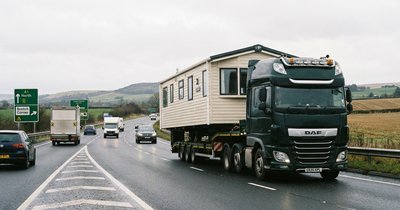
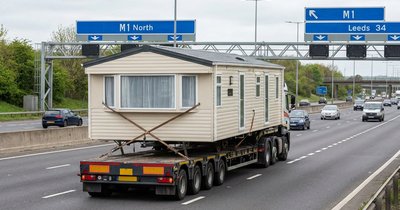
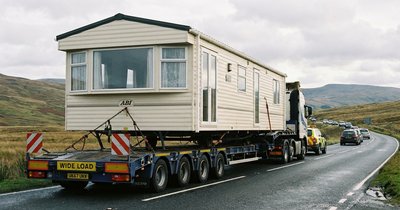
A static caravan is typically 10 to 12 feet wide and 30 to 40 feet long. No private tow vehicle can handle those dimensions. Unlike touring caravans, which are under 8 feet wide and designed to be towed behind a car, statics require specialist low-loaders and bespoke trailer equipment purpose-built for the job.
If you own a touring caravan, this article is not for you. The logistics, legal framework, and cost structure are completely different. Park homes and mobile homes used as primary residences follow the same transport process as statics.
The critical distinction is the legal classification. Because a static caravan exceeds standard road width limits, it falls under The Road Vehicles (Authorisation of Special Types) (General) Order 2003, known as STGO. That classification triggers a specific regulatory process covering permits, police notification, and escort vehicles. It is the reason you cannot simply ring any haulier and ask them to transport a static caravan.
The Legal Requirements: Permits, Police, and Escort Vehicles
Every static caravan move in the UK requires STGO notifications to Highway, Bridge, and Police authorities. This is not optional. It is a legal obligation that falls on the transport operator, not on you as the owner.
For standard moves with a gross weight up to 80,000 kg, the operator must give 2 clear working days’ notice to the relevant authorities. Heavier loads require 5 days.
A police permit is required from every police force area the route passes through. If your caravan is moving from North Wales to Yorkshire, that could mean permits from three or four separate forces. This is entirely the operator’s responsibility. If a transporter asks you to arrange your own permits, treat that as a serious red flag.
An escort vehicle is also legally required because the caravan straddles two lanes during transit. Reputable operators include this in their standard quote. If it appears as a separate line item or optional add-on, question why.
These permit lead times are the practical reason you need to plan your move 2 to 4 weeks in advance. The statutory minimum is 2 working days, but once you factor in operator scheduling, access surveys, and the permit window itself, a realistic timeline is closer to a month.
How to Transport a Static Caravan: The End-to-End Process
Understanding the full process puts you in control. Here is how a static caravan move works from first enquiry to reconnection, based on what actually happens rather than a simplified marketing summary. (For the detailed version with checklists for each stage, see our step-by-step guide to moving a static caravan.)
Site survey. The transporter visits both the origin and destination sites to check access. They are looking at road width, overhead cables, tree canopy, gate dimensions, and the turning circle on the pitch. If either site has restricted access, the quote will reflect that, or the operator may flag that a crane is needed on arrival.
Quote. Pricing is based on distance, caravan width and length, route complexity, and whether siting is included. Always confirm exactly what the quote covers before you accept it.
Next, the operator files STGO notifications with the relevant Highway and Police authorities. You should not need to do anything here. If an operator asks you to handle permits yourself, find a different operator.
Before move day, disconnect and cap all utilities: water, gas, and electric. Remove awnings, skirting, steps, and any external attachments. This is usually your responsibility, though some operators offer it as an add-on.
Loading. The caravan is winched or craned onto the specialist low-loader. This is precision work. The unit must be secured properly for the road journey.
The convoy then travels with an escort vehicle along a pre-planned route that avoids low bridges, narrow roads, and weight-restricted structures. Travel speed is slow, typically 30 to 40 mph, and long-distance moves may require an overnight stop.
If the destination pitch has restricted access, a crane may be required to lift the caravan into position. This is a separate cost. Budget £1,500 to £2,000 if your site survey indicates a crane is needed.
Siting. The caravan is placed on its pitch, then jacked, levelled, and set on blocking or a concrete pad following the park’s specific rules. Not every transporter offers siting. Some will deliver to the park entrance and leave the rest to the site operator.
Finally, utilities are reconnected and any steps or decking are reinstated. This may be handled by the transporter, the park, or a separate contractor depending on your arrangement.
How Much Does Static Caravan Transport Cost?
There is no single price for static caravan transport. Cost depends on distance, caravan width, route complexity, and whether siting and reconnection are included in the quote. The market has almost no published pricing, which is exactly why getting multiple quotes matters. Our dedicated static caravan transport cost guide breaks down per-mile rates by width, escort fees, crane hire, and every other line item.
Some operators charge per mile. Lincolnshire Caravan Transport, for example, lists rates from £2.50 per mile for a 10-foot-wide caravan, with a minimum charge of £250. A 12-foot-wide caravan costs approximately 20% more because the extra width affects route options, escort requirements, and the equipment needed.
Full-job pricing is more common than per-mile rates. Here is what to expect based on distance:
| Scenario | Estimated cost |
|---|---|
| Short local move (same park or within ~30 miles) | £300 to £750 |
| Mid-range move (up to ~150 miles) | £750 to £1,500 |
| Long-distance (Scotland, Wales, South Coast, 200+ miles) | £1,500 to £2,500+ |
| 12ft wide premium over 10ft | +~20% |
| Crane hire (if required at destination) | £1,500 to £2,000 extra |
| Minimum charge (most operators) | £250 to £500 |
To put those ranges into context, Caravan UK in North Wales publishes regional examples for a 10-foot caravan collected from their base: Manchester or Liverpool costs around £750, Yorkshire or Hull around £1,250, Birmingham or Gloucester roughly £1,500, and Portsmouth approximately £2,000.
Siting, levelling, and reconnection are often quoted separately. Always confirm what is included before you accept a price. A quote that looks £300 cheaper than a competitor may simply exclude the siting work, which you will then pay someone else to do anyway.
A quote from a single operator tells you what that operator charges. It does not tell you what the market rate is. The only way to know whether a price is fair is to compare it against at least two others.
What to Look For When Choosing a Static Caravan Transporter
You are about to spend £500 to £2,500 on moving a unit that may be worth £20,000 or more. If something goes wrong during transport, resiting and reconnection alone can cost up to £10,000 according to Howden Insurance. The transporter you choose matters.
STGO compliance. They must be licensed to carry abnormal loads and must handle all permit paperwork themselves. Ask directly. Any hesitation is a warning sign.
Ask to see their rig. You need a bespoke low-loader or trailer built for static caravans, not a repurposed flatbed. If they cannot show you photographs of their equipment, that tells you something.
Is the escort vehicle included in the quote? It is a legal requirement, not an optional extra. If an operator lists the escort as an add-on, ask why a legally required component is not part of the standard price.
Can they deliver, site, level, and reconnect, or will they drop the caravan at the park entrance and leave? Full-service operators save you coordinating multiple contractors.
Insurance. Most holiday parks require a minimum of £5 million public liability insurance from any transporter working on their site. Beyond that, check for goods in transit cover that protects your caravan during the move. Ask for certificates before you book, not after.
Established operators will have photographs of previous moves and references from park owners. If a transporter cannot show you evidence of their work, consider why.
Finally, if your destination pitch has limited access, does the operator have an existing relationship with a crane hire company? Coordinating crane and transport schedules is time-sensitive. An operator who has done it before will manage it better than one arranging it for the first time.
When to Book: Seasonal Timing and Lead Times
Most static caravan moves happen in spring (March to May) and autumn (September to October). These windows sit either side of peak holiday season, when parks allow transport access without disrupting other guests. Many holiday parks actively restrict caravan movements during July and August, so check with your site before planning a summer move.
The STGO permit process requires a minimum of 2 clear working days’ notice, but that is the statutory minimum, not a realistic planning timeline. Once you account for the site survey, operator availability, and the permit window, you should allow 2 to 4 weeks from first enquiry to move day.
Static caravan transport to Scotland is available but limited. Fewer operators cover routes north of the border, so expect less competition on quotes and longer lead times. For static caravan transport to Northern Ireland, the logistics are more involved: a ferry crossing adds a day to the schedule and requires coordination between the road haulier and the ferry operator. If either destination applies to you, start your search at least 6 weeks out rather than 4.
Spring is the busiest booking period. Operators fill up quickly as caravan parks reopen and seasonal moves stack up. If your move falls between March and May, get your quotes early and book as soon as you are satisfied with the price and the operator.
Compare Quotes From Specialist Static Caravan Transporters
Post your move on TransportQuoteCompare, describe your caravan and your route, and let verified transporters come to you with competing quotes. You compare prices, insurance details, and siting capabilities side by side, then choose the operator that fits your requirements and your budget. No obligation to accept any quote.
One quote tells you what one operator charges. Multiple quotes tell you what the market charges. For a job this specialist and this variable in price, that difference matters.
Need a Transport Quote?
Compare quotes from verified UK transporters. Free and takes under 2 minutes.
Get Free Quotes