Static caravan transport costs between £300 and £2,500. That range is technically accurate and almost completely useless if you are trying to set a budget.
The problem is that “transport” for a static caravan is not one service. It is four to six separate cost lines, and most operators only itemise them when you ask. The haulage fee is the headline number, but escort vehicles, crane hire, siting labour, permits, and transit insurance can double the final bill. If you have already searched for this and found nothing but vague ranges, here is the actual breakdown.
How Much Does Static Caravan Transport Cost? (Quick Answer)
Here are the numbers. Budget a minimum of £1,000 even for a short move, according to specialist insurer Ripe Insurance. Longer or more complex jobs run significantly higher.
| Region / Distance | 10ft Wide Caravan | 12ft Wide Caravan* |
|---|---|---|
| Short local move (North Wales / rural) | £300 – £1,000 | £360 – £1,200 |
| Medium distance (Midlands / North England)† | £600 – £1,500 | £720 – £1,800 |
| Long distance or complex access (Devon, Cornwall, London) | £1,200 – £2,000 | £1,440 – £2,500+ |
*12ft estimates based on the typical 20% width surcharge applied to 10ft rates (source: Lincolnshire Statics). †Medium distance figures are estimates interpolated between short local and long distance data points. 10ft ranges sourced from operator data via Statics4Sale and Lincolnshire Statics.
These figures cover the haulage fee only. Add £300 to £1,000 for siting (disconnection, placement, and reconnection of utilities) if your move is site-to-site — a realistic all-in budget for a full move is £1,500–£5,000 once every line item is counted, and our step-by-step guide to moving a static caravan walks through where each cost lands in the process. The real cost of moving a static caravan includes up to five additional line items, and not all transporters include them in their headline quote.
Per-mile rates: from £2.50/mile for a 10ft caravan with a minimum charge of around £250 (source: Statics4Sale). A 12ft caravan adds roughly 20%, bringing the rate to about £3.00/mile with a £300 minimum. Twin-unit lodges are quote-only and cost significantly more.
Why Static Caravan Transport Is More Expensive Than You’d Expect
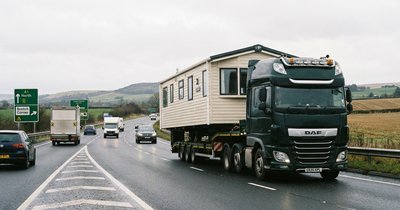
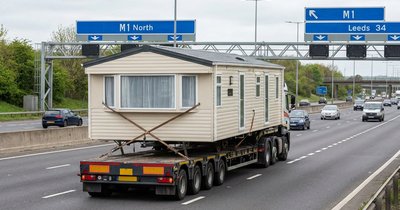
Static caravans are not touring caravans. They have no road-legal axles, no towing points, and no way to be hitched behind a car. Moving one requires a specialist low-loader lorry, a trained crew, and in almost every case, police involvement.
The reason is width. Most static caravans measure between 2.9 and 4.0 metres wide. A standard UK road lane is 2.55 metres. That means virtually every static caravan move triggers UK abnormal load regulations.
Under these rules, the transport company must notify the police at least two working days before the move. At least one escort vehicle is legally required when the load straddles two lanes. Escort drivers must hold a City & Guilds Level 2 or Level 3 certification. Routes have to be pre-planned to avoid low bridges, weight-restricted roads, and narrow sections.
Even a 20-mile move involves legal paperwork, specialist drivers, dedicated equipment, and at least one escort vehicle. Compare that to a touring caravan, where you can hire a towing service for £1 to £3 per mile (according to Caravan Towing Services) with none of the regulatory overhead. The cost difference is structural, not because anyone is overcharging you.
Once you understand the legal framework, the cost breakdown makes sense. Here is exactly what you are paying for.
The Full Cost Breakdown: What’s Actually in Your Quote
A static caravan transport quote can contain up to six separate cost components. Some operators bundle everything into one number. Others list them separately. Either way, you need to know what each one is so you can compare quotes properly.
1. Transport fee (haulage)
This is the core charge for moving the caravan on a flatbed or low-loader. Most operators price per mile with a minimum charge.
| Caravan Width | Per-Mile Rate | Minimum Charge |
|---|---|---|
| 10ft (3.0m) | From £2.50/mile | ~£250 |
| 12ft (3.7m) | From £3.00/mile (+20%) | ~£300 |
| Twin-unit / lodge | Quote only | Significantly higher |
2. Escort vehicle(s)
Legally required for abnormal loads. Most transport companies include one escort in their base quote, but routes through urban areas or with significant width (12ft+ caravans) are more likely to require two escorts, one leading and one following. Before comparing quotes, confirm whether escort costs are included or charged separately.
3. Crane or siting equipment
At the destination, the caravan needs to be lifted off the lorry and placed onto the pitch. Some operators use a hi-ab arm mounted on the lorry itself. Complex sites with restricted access may need a standalone crane, which is often quoted as an additional line item.
4. Siting fee
This covers the labour for disconnecting the caravan at the origin (gas, electric, water, sewers) and reconnecting everything at the destination. Siting can add £300 to £1,000 or more depending on what connections are involved and how accessible the pitch is. Some parks charge their own siting fee on top.
5. Route planning and permits
For complex routes through tight lanes, urban areas, or past low bridges, the transporter may incur additional permit costs and planning time. This is more common in southern England and urban areas than in open rural routes.
6. Transit insurance
Specialist in-transit cover for the move itself. Check whether the policy covers the caravan’s full replacement value. A caravan worth £25,000 may be covered for only £10,000 under a standard transit policy, which leaves you exposed if something goes wrong during transport.
Always ask for an itemised quote. When you compare static caravan transport prices, make sure you are comparing like-for-like. A £1,200 all-inclusive quote is better value than a £900 quote that excludes siting and insurance.
The job type also affects how many of these cost lines apply. A site-to-storage move is cheaper than a full site-to-site relocation.
Cost by Job Type: Site-to-Site, Storage, and Dealer Delivery
Not every static caravan move is the same job. The type of move determines which cost components apply and how much the total comes to.
Site-to-site
The most common and most expensive job. The caravan is disconnected from one park pitch, transported by road, and fully sited at a new pitch. Every cost component applies: disconnection, haulage, escort, crane or hi-ab, siting, and reconnection. Budget for the full range.
Site-to-storage or depot
Cheaper than a site-to-site move because no siting is needed at the destination. The caravan just needs to be unloaded at a storage yard. A site-to-site move costing £1,800 might drop to £1,100–£1,300 as a site-to-storage job, because you eliminate siting labour and reconnection.
Dealer delivery
A new caravan delivered from the dealer or manufacturer to your site. This is often included in the purchase price or negotiated as part of the deal. If you are buying a new static caravan, ask the dealer whether delivery includes full siting or just drop-off. The difference is significant, both in cost and in the hassle of arranging siting separately.
Emergency or short-notice moves
Operators charge a premium for short-notice scheduling. But “urgent” does not mean next-day. The two-working-day police notification is a legal minimum that cannot be bypassed. In practice, “urgent” means three to five days versus the standard two to three week lead time. If you can plan ahead, you will pay less.
Beyond job type, six other factors move the needle significantly on your final price.
What Affects the Final Price (And By How Much)
Distance
The biggest single factor. A 50-mile move at £2.50/mile is £125 in haulage, but you still pay the £250 minimum. A 200-mile move is £500 in haulage. The fixed costs (escort, crane, siting) stay the same either way, so longer moves actually cost less per mile overall. If your move is under 100 miles, the minimum charge and fixed costs dominate your bill.
Caravan width
A 12ft caravan adds roughly 20% to the static caravan transport cost per mile compared to a 10ft model. Twin-unit lodges are substantially more expensive again, requiring wider loads and often two escort vehicles.
Access at both ends
This catches people out. Narrow lanes, low overhanging trees, and tight park entrances can force the transporter to use smaller vehicles, additional equipment, or longer alternative routes. Identify access constraints at both the pickup and delivery sites before you request quotes, and tell the transporter upfront. Surprises on the day cost money and delay the job.
Region
Regional price variation is not just about distance. Access complexity explains why a 20-mile move in Devon can cost as much as a 100-mile move across Lincolnshire. According to operator data from Lincolnshire Statics, North Wales moves typically run £300 to £1,000 while Devon, Cornwall, and London moves can reach £2,000.
Season
April to September is peak season. Parks are completing purchases, site operators are moving stock, and transporters are booked weeks ahead. Off-peak (October to March) typically offers shorter lead times and operators are more willing to negotiate on price to fill their schedules. No published industry percentage exists for the seasonal difference, but flexibility on timing has a real effect on what you pay.
Urgency
Short-notice scheduling carries a premium. Build in two to three weeks of lead time for standard pricing. The more flexibility you give the transporter on dates, the better your chance of a competitive rate.
With those factors in mind, here is how to get the best price for your specific move.
How to Get the Best Price for Your Static Caravan Transport
Get at least three quotes
This is the single most effective lever. Prices between operators vary significantly for the same job. TransportQuoteCompare makes this fast. Post your job once and receive multiple quotes from experienced transporters who specialise in static caravan moves.
Be flexible on dates
A two to four week window lets transporters slot your job into an existing route. If they are already making a trip in your direction, they can offer a lower rate because the lorry is running anyway. This is called backloading, and it is one of the best ways to bring the cost down.
Know your access constraints upfront
Tell the transporter about any narrow lanes, low bridges, or tight pitch access before they quote. If they arrive on the day and discover a problem that was not mentioned, you will pay for the delay and any additional equipment needed. Being upfront avoids surprise charges.
Prepare the caravan before the crew arrives
Remove loose items, secure all doors and windows, and ensure the caravan is accessible on the day. Delays caused by poor preparation add time charges.
Ask for an itemised quote
Always confirm what is included: escort vehicles, siting at the destination, and transit insurance. A quote that looks cheaper may not include siting or insurance, which you will need to arrange and pay for separately.
Check whether a reimbursement applies
Some park operators and dealers contribute toward transport costs. Haven, for example, offers up to £750 toward transport when a caravan is moved to one of their parks. Ask your destination park whether a similar scheme exists before you pay the full amount yourself.
Get Your Static Caravan Transport Quotes
You now know what every line item costs and which factors push the price up. The next step is straightforward: get quotes from multiple transporters, compare them line by line using the breakdown above, and pick the best value for your route.
That is exactly what TransportQuoteCompare is built for. Post your job once, receive quotes from operators who specialise in static caravan moves, and choose the best value for your specific route and requirements.