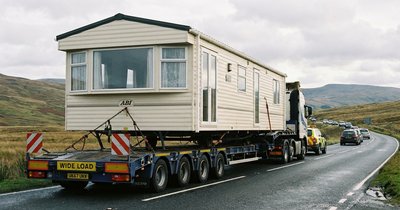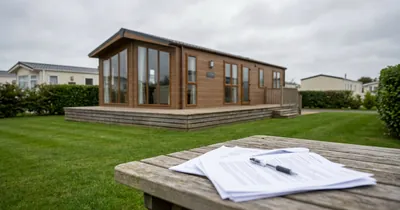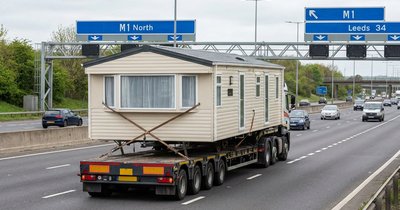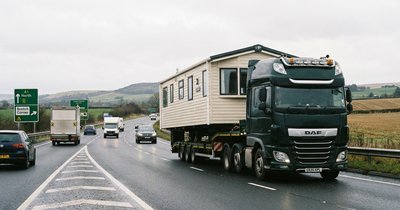
Most owners asking how to move a static caravan expect something like hitching up a tourer. It is nothing like that. A static caravan weighs between 2 and 15 tonnes, measures up to 40 feet long and 12 feet wide, and cannot be towed. To move a static caravan from one site to another, you need a low-loader truck, police notification, and often escort vehicles just to travel on public roads.
- Can you tow a static caravan?
- Weight and size in metres
- Step 1: Permissions at both sites
- Step 2: Check your caravan is eligible to move
- Step 3: Who moves it, and how to choose them
- Step 4: Plan the route and obtain permits
- Step 5: Disconnect utilities and prepare the caravan
- Step 6: Arrange transit insurance
- Step 7: What happens on transport day
- Step 8: Re-site and reconnect at the new location
- What it costs (short answer)
- Timeline: how long does the whole process take?
- Frequently asked questions
Can you tow a static caravan?
No. A static caravan cannot be towed on a public road. It has no chassis brakes, road lighting or towing coupling rated for the highway, it weighs 2 to 15 tonnes, and at 3.05 m (10 ft) or 3.66 m (12 ft) wide it exceeds the 3 m width at which the GOV.UK special types enforcement guide requires two days’ police notice. It travels on a low-loader as a notified wide load, carried rather than towed.
The confusion comes from what happens inside a park. Site staff do shunt statics with a tractor or a purpose-built tug, and the chassis wheels exist for exactly that job: rolling a few metres onto a low-loader bed or across a pitch. That is legal because a park’s internal roads are private land.
The moment the caravan needs to cross a public road, it becomes a haulage job. If anyone offers to tow your static to a new park behind a tractor or a 4x4, decline: it is not legal, your insurer will not cover it, and the chassis was never built for it.
How much does a static caravan weigh, and what size is it in metres?
A UK static caravan typically weighs 2 to 15 tonnes, depending on length and single or twin configuration. Standard widths are 10 ft (3.05 m), 12 ft (3.66 m) and 13 to 15 ft (3.96 to 4.57 m); lengths run 28 to 40 ft (8.5 to 12.2 m). The legal maximum for a caravan under UK law is 20 m long, 6.80 m wide and 3.05 m internal height. Width, not weight, decides whether your move needs escort vehicles.
A 15-tonne twin unit is heavy, but each half travels as its own load and the low-loader is rated for far more. Width band is what changes the job. The GOV.UK special types enforcement guide puts the steps at 3 m (two days’ police notice), 3.5 m (police notice plus an attendant, in practice an escort vehicle) and 5 m (a VR1 permit).
| Caravan Width | Transport Category | Escort Vehicles Required? | Police Notification? |
|---|---|---|---|
| 10ft (3.05m) | Standard wide load | Usually no | Yes (2 working days’ notice) |
| 12ft (3.66m) | Abnormal wide load | Yes, front and rear | Yes, every force area on route |
| 13 to 15ft (3.96 to 4.57m) | Abnormal wide load | Yes, front and rear | Yes, every force area on route |
| Twin unit (2 × 10ft) | Two separate loads | Depends on individual half width | Yes |
Measure your own caravan rather than trusting the brochure: a bay window or roof overhang can make a nominal 12 ft unit wider on the trailer, and the notification the haulier files must match what is on the truck.
Step 1: Moving a static caravan from one site to another: permissions at both ends
Moving a static caravan from one site to another begins with the receiving park, not the haulier. The new park will ask three things: does it accept “bring-on” caravans from other sites, is your unit under its age limit (usually 15 to 20 years from manufacture), and will you pay its siting fee, typically £500 to £2,000. A no on any of the three ends the move before it starts. With that settled, you need written confirmation from both ends.
Leaving your current park
Contact your current park owner or site manager and confirm:
- Your departure date: most parks require at least 4 weeks’ notice
- Outstanding pitch fees: some agreements require you to pay until the end of the licence year, regardless of when you leave
- Access arrangements: the low-loader needs clear access to your pitch
- Utility disconnection: confirm who disconnects gas, electric and water. It is usually the caravan owner’s job
- Site restoration: some parks require you to restore the pitch to its original condition, including removing any decking, skirting or hardstanding you added
Arriving at the new site
If you are moving to another caravan park, check the following before committing:
- Many parks only sell their own stock and will not accept caravans from other sites. Get the bring-on acceptance in writing
- A park that accepts bring-ons may still refuse a 25-year-old unit. Ask for the age limit before you ask for a pitch
- Pitch dimensions: confirm the pitch can physically accommodate your caravan. A 12ft-wide, 40ft-long unit needs a larger pitch than a compact 10ft × 28ft model
- Access for the delivery vehicle: a loaded low-loader is 45 to 55 feet long and 14 feet wide for a 12ft caravan. If the park entrance or internal roads are too narrow, a crane may be required at additional cost
Moving to private land
If you are placing a static caravan on private land, you will almost certainly need planning permission from your local authority. Under the Caravan Sites and Control of Development Act 1960, using land as a caravan site requires both planning permission and a site licence.
There are limited exemptions, such as a caravan used as ancillary accommodation in the grounds of an existing dwelling, but the rules vary by local authority. Check with your council’s planning department before buying a pitch or booking transport.
Step 2: Check Your Caravan Is Eligible to Move
A static caravan is fit to move if its chassis and floor are sound, its width is known, and it falls inside the legal definition of a caravan. Check all three before paying for a quote.
Structural condition
A static caravan that has been on one site for 20+ years may have chassis corrosion, soft floors, or damp damage that makes it unsafe to transport. If there is any doubt, get a pre-move condition survey from an independent inspector. It typically costs £100 to £200 and could save you thousands if the caravan is not fit for transport.
Dimensions and transport category
Width sets the transport category, escort requirement and notification. Check your caravan against the width table in the weight and size section above before asking for quotes.
Twin units are manufactured in two halves and must be transported as two separate loads. At the destination, the halves are reassembled and sealed. This roughly doubles the transport cost.
Legal definition
Under UK law (Caravan Sites and Control of Development Act 1960 s.29, with the twin-unit size limits in the Caravan Sites Act 1968 s.13), a structure is a caravan only if it can be moved by road and sits within the 20 m by 6.80 m by 3.05 m limits above; anything larger may be classed as a building, with different planning implications.
Step 3: How do you move a static caravan? Who does it, and how to choose them
Static caravans are moved by hauliers with low-loader trailers, not by the park or the owner. In TransportQuoteCompare’s database of 534 UK firms that move static caravans, compiled March to May 2026, only 216 have a Google rating at all and the median rated firm has just 11 reviews, so reviews are a weak filter for this trade. Vet on Operator’s Licence, goods-in-transit cover and whether the firm has carried your width before, not on stars.
Google Maps classifies the 534 firms as 187 trucking companies, 161 transportation services, 40 towing services, 14 movers, 14 transportation escort services, 12 logistics services, 6 plant and machinery hire firms and 5 shipping companies. Most are general hauliers who own a low-loader, not caravan-only specialists.
Of the 216 rated firms, 116 have 10 or more reviews, just 42 have 50 or more, and the median rating is 4.7, so the scale barely separates anyone. Websites are more common: 433 of the 534 have one, which makes a missing website a fairer warning sign than missing reviews. (Source: TransportQuoteCompare transporter database, Google Maps searches across 62 UK cities plus web research, March to May 2026; figures computed 13 September 2026.)
In practice, then, moving a static caravan means finding three hauliers who can show you an Operator’s Licence, a goods-in-transit certificate and a recent move at your width, and comparing their quotes like for like. You can compare quotes from caravan transporters registered on TransportQuoteCompare or approach firms directly. Either way, the firm you book needs:
- Purpose-built low-loader vehicles rated for the weight of your caravan (typically 2 to 15 tonnes)
- Escort vehicles (for 12ft+ wide units) with appropriate marker boards and warning lights
- Goods-in-transit insurance that specifically covers static caravan transport
- The right trailer for your width. A company that only moves 10ft units may not have the vehicle or the notification routine for a 12ft wide load
- An Operator’s Licence issued by the Traffic Commissioner
Getting quotes
Get at least three quotes. When requesting a quote, provide:
- Caravan make, model, and year
- Exact dimensions (width, length, and height)
- Current location (full address and postcode)
- Destination (full address and postcode)
- Access conditions at both sites (road width, turning space, overhead obstructions)
- Whether disconnection and reconnection of utilities is included or separate
- Your preferred dates and any flexibility
A reputable company will want to see photographs of both the caravan and the access at both sites before confirming a price. Be wary of any company that quotes a fixed price without asking these questions.
What to check before booking
- References over reviews: reviews are thin in this trade (see above), so ask for references from recent static caravan moves, not just general haulage work
- What’s included: some quotes include permits, escorts, disconnection and siting. Others quote transport only, with everything else as extras
- Cancellation terms: weather can delay wide-load movements. Understand the company’s policy on postponements
Step 4: Plan the Route and Obtain Permits
Route planning for a static caravan is not just about finding the shortest distance. A loaded low-loader carrying a 12ft-wide caravan is 14 feet wide on the road, 45 to 55 feet long and up to 15’6″ high.
Who plans the route?
Your transport company handles route planning. This is one of the key reasons to use a firm that moves statics regularly rather than one that has never carried your width: they know which roads are passable, where the problem bridges and junctions are, and which police forces need notification.
Police notification and permits
Every static caravan is a notifiable wide load. The GOV.UK special types enforcement guide requires two clear working days’ police notice for any load wider than 3 metres including projections, which a 10 ft (3.05 m) unit already exceeds, and an attendant for anything over 3.5 metres, which in practice means front and rear escort vehicles with amber beacons and WIDE LOAD boards for every 12 ft unit and above. Your haulier files the notification with every police force area on the route. If the route crosses bridges or structures with weight or width limits, the highway authority may also need to approve it and can impose speed restrictions.
For longer journeys crossing multiple police force areas, notifications and approvals can take 2 to 4 weeks. This is often the single biggest factor in the timeline.
Common route problems
- Low bridges: anything under the loaded height forces a detour
- Narrow roads: at 14ft wide, rural lanes, village high streets and residential roads may be impassable
- Tight junctions and roundabouts: the 55ft overall length means the vehicle cannot take sharp turns. Some roundabouts must be traversed by driving straight across
- Time restrictions: many urban roads restrict abnormal loads to off-peak hours (typically before 7am or after 7pm). Motorway movements may be restricted to overnight only
Step 5: Disconnect Utilities and Prepare the Caravan
Disconnection is the owner’s job, not the haulier’s, and it needs doing in the days before the truck arrives: gas off and regulator removed, electricity isolated at both ends, water fully drained, waste capped.
Utility disconnection
- Gas: turn off all gas appliances, close the gas bottle valves and disconnect the regulator. If your caravan has a mains gas supply (rare on parks), this must be disconnected by a Gas Safe registered engineer
- Electricity: switch off at the mains consumer unit inside the caravan and at the park’s external hookup point, then disconnect the supply cable. If the caravan has a hard-wired connection (not a plug-in hookup), an electrician is required
- Water: turn off the mains water supply to the caravan. Open all taps to drain the system, then drain the hot water cylinder and any header tanks
- Drainage: disconnect the waste water drain. If connected to a sewage system, cap the site-side pipe
Some transport companies offer a disconnection service as an add-on (typically £100 to £250). If you are not confident doing it yourself, this is worth paying for, especially for gas, which must be handled by a competent person.
Interior preparation
- Remove all personal belongings. The transport company’s insurance covers the caravan structure, not its contents. Pack everything separately and transport it yourself
- Secure or remove loose fittings: take down mirrors, ornaments and anything mounted on walls that could fall. Open cupboard doors and remove crockery and glassware
- Lock all windows and the main door. The vibration of road transport will rattle anything that is not secured
- Roll up external awnings and remove any satellite dishes, TV aerials or roof-mounted accessories
External preparation
- Remove skirting around the base of the caravan
- Detach any fixed decking that would prevent the caravan being lifted or slid onto the low-loader
- Clear the immediate area. The low-loader needs room to manoeuvre alongside the caravan, so move garden furniture, planters and fencing out of the way
- Lower stabiliser legs, or confirm with your transport company how they want the chassis prepared for loading
Step 6: Arrange Transit Insurance
Your static caravan insurance almost certainly stops covering the caravan the moment it leaves the pitch. Standard park policies insure a sited caravan on a licensed park, not one on a trailer on the A1. The haulier’s goods-in-transit policy covers the journey, but only up to its limit, and a policy limit below the caravan’s replacement value is no use to you. So before moving day you need to know three things: what your own policy says about transit, what the haulier’s cover limit and excess are, and who pays for the gap.
Transport company’s goods-in-transit insurance
Any reputable transport company will carry goods-in-transit (GIT) insurance. Ask for the certificate and check:
- The cover limit: is it enough for the full replacement value of your caravan, not a nominal figure?
- The excess: what is the deductible in the event of a claim?
- Exclusions: does it cover all risks, or only named perils (fire, theft, collision)? Some policies exclude wind damage, which is relevant for a wide load
Options for transit cover
If there is a gap between the transport company’s GIT cover and your caravan’s value, you have two options:
- Add transit cover to your existing static caravan policy. Contact your insurer and ask for a temporary transit extension. Some specialist static caravan insurers offer this as a standard add-on
- Take out a separate transit insurance policy, available from specialist brokers for one-off moves. Typically costs £50 to £150 depending on the caravan’s value and the distance
Do not leave this until the last minute. Arrange cover at least a week before the move date. If you are comparing policies anyway, see our guide to comparing static caravan insurance.
Step 7: What Happens on Transport Day
On the day, the haulier winches the caravan onto the low-loader, straps it, fits the boards and lights, and drives the police-notified route at abnormal-load speeds. Loading takes 30 to 60 minutes; a 100-mile move is 4 to 5 hours of driving.
Loading
- The low-loader reverses alongside or in front of your caravan
- The caravan is winched or rolled onto the low-loader bed on its own chassis wheels; it is not craned on
- The caravan is positioned on the truck and secured with heavy-duty ratchet straps at multiple points along the chassis
- Marker boards, flags and any required lighting are fitted
In transit
- The loaded vehicle travels at abnormal-load speeds, typically 40 mph or less. The haulier’s police notification states the speed for the movement
- For 12ft-wide loads, escort vehicles travel 50 to 100 metres ahead and behind, warning oncoming traffic and controlling road junctions
- The journey follows the pre-planned, police-notified route, with no shortcuts
If you need a crane
If the destination pitch cannot be reached by the low-loader, for example because the access road is too narrow or the pitch is behind other caravans, you will need a crane to lift the caravan from the truck to the pitch. Crane hire is quoted as a separate line item and must be booked in advance, so ask for it in writing before you accept the haulage quote.
Your transport company will advise during the quoting stage whether a crane is likely to be needed.
Step 8: Re-site and Reconnect at the New Location
The haulier positions and levels the caravan on the new pitch. Reconnecting the utilities is usually a separate job, done by the park or by tradespeople you arrange, and the gas needs a Gas Safe registered engineer.
Positioning and levelling
- The caravan is positioned on the pitch using the low-loader or crane
- Axle stands or support blocks are placed under the chassis at the manufacturer’s specified points
- The caravan is levelled using adjustable legs or packers. It must be level both side-to-side and front-to-back for doors and windows to function correctly and to prevent water pooling on the roof
- Ground anchors or tie-down straps are fitted to secure the caravan against high winds. This is a requirement under most park licence conditions
Utility reconnection
- Gas: reconnect the gas bottle or mains supply, fit a new regulator if required, and test all gas appliances. This should be done by a Gas Safe registered engineer who will issue a safety certificate
- Electricity: connect to the site’s hookup point or mains supply. An electrician should verify the connection, test the consumer unit and check all circuits
- Water: connect to the site’s water supply, fill the system and check for leaks at all joints. Run all taps and flush the hot water cylinder before use
- Drainage: connect waste water and sewage outlets to the site’s drainage system
Utility reconnection typically takes half a day to a full day and costs £200 to £500 depending on whether the park provides this service or you need to arrange independent tradespeople.
Final checks
- Walk through the caravan and check for any transit damage: cracked windows, shifted furniture, water ingress
- Test all gas appliances, electrical sockets and water outlets
- Check the roof for any damage or displaced seals
- If you find any damage, photograph it immediately and notify both the transport company and your insurer before accepting the delivery
How much does it cost to move a static caravan? The short answer
Moving a single static caravan in the UK costs roughly £1,000 to £5,000 or more all in, the range our cost guide (updated July 2026) arrives at from published insurer and operator rates; a twin unit costs more because it travels as two loads. Three things drive the price: distance, width band (escorts and notifications), and access at each end, above all whether a crane is needed. For the full breakdown, read how much does it cost to move a static caravan.
Timeline: How Long Does the Whole Process Take?
A static caravan move takes 4 to 8 weeks from first phone call to reconnected caravan, and most of that is waiting on police notifications and haulier availability. Here is where the time goes:
| Stage | Typical Duration | Key Actions |
|---|---|---|
| Planning and permissions | 1 to 2 weeks | Confirm permissions at both sites, check caravan eligibility |
| Getting quotes | 1 to 2 weeks | Contact transport companies, compare quotes, book |
| Permits and route planning | 2 to 4 weeks | Police notifications, highway authority approvals (handled by transport company) |
| Preparation | 2 to 3 days | Disconnect utilities, remove belongings, prepare site |
| Transport day | 1 day | Loading, transport, unloading |
| Re-siting and reconnection | 1 to 2 days | Levelling, anchoring, utility connections, testing |
Total: 4 to 8 weeks from start to finish. During peak season (spring and summer), when transport companies are busiest, lead times for booking can stretch to 6 to 8 weeks alone. If you are working out how to move a static caravan against a fixed deadline, for example the end of your park licence, start the process at least 10 weeks in advance.
Frequently Asked Questions
Can I move a static caravan myself?
No. Static caravans are too heavy and too wide to tow, and moving one needs a low-loader, specialist securing equipment and police-notified wide-load paperwork. A DIY move risks structural damage, road traffic offences, injury and a voided insurance policy. Use a haulier who does this work.
Can you move a static caravan with a tractor?
Only within a park. Site tractors and tugs move statics short distances between pitches inside the park boundary, where road traffic law does not apply. On a public road the caravan must travel on a low-loader as a notified wide load (see can you tow a static caravan above). A tractor towing a static on the highway has no rated coupling, brakes or lighting and is not legal.
What is the difference between moving and re-siting?
Moving means transporting the caravan from one location to another on public roads. Re-siting (or “siting”) means positioning the caravan on its new pitch, levelling it, and connecting it to utilities. Some transport companies offer both as a combined service. Others only handle the road transport, leaving you to arrange siting separately.
Can I move a static caravan in winter?
Yes, but with caveats. Winter moves carry additional risks: wet or icy roads slow journey times, frozen ground can make site access difficult, and shorter daylight hours may restrict permitted travel times for abnormal loads. If you must move in winter, ensure the water system is fully drained before transport to prevent freeze damage.
What if my static caravan is too old to move?
If the destination park’s age limit rules out your caravan, or the structure is in poor condition, you have three alternatives:
- Part-exchange with a dealer: trade your old caravan for credit towards a newer model
- Sell privately on sites like Gumtree, Facebook Marketplace or specialist platforms
- Scrapping: for caravans with no resale value, specialist companies will dismantle and dispose of the unit. Get a written quote from a licensed dismantler; older caravans may contain asbestos panels, which raises the cost
Do I need to be present on moving day?
It is strongly recommended. You should be at the pickup site to hand over keys and confirm the caravan’s condition, and at the destination to verify positioning and check for transit damage before the transport company leaves. If you cannot attend, appoint someone you trust to act on your behalf and make sure they have authority to sign off on the delivery.