Car Transport Companies UK: How to Choose the Right One
You’ve just bought a car from a seller 200 miles away. Maybe it was a BCA auction lot, maybe an AutoTrader listing that was too good to pass up. Either way, you now need someone to move a vehicle worth £8,000 or more to your door, and the entire process feels opaque. Who do you call? How do you know they’re insured for the full value? And how do you know the price is fair when you have nothing to compare it against?
Most people Google “car transport companies UK,” call the first result, and accept whatever price they’re given. That approach works until it doesn’t. A single quote with no reference point is not a price. It’s a guess.
This guide walks you through how to choose a UK car transport service that actually delivers on what it promises: confirming insurance limits before you book, spotting the red flags that mark out cowboy operators, and knowing when to insist on enclosed transport over open. By the end, you will have a checklist you can apply to any quote you receive.
Why demand for car transport in the UK is growing (and why it matters to you)
The UK used car market is enormous. In 2025, 7.8 million secondhand vehicles changed hands, marking the third consecutive year of growth. That volume creates a transport industry where hundreds of operators compete for work, and where quality varies wildly between them.
Online buying has accelerated this. BCA, Manheim, AutoTrader, eBay, Facebook Marketplace. Buyers now routinely purchase vehicles they have never seen in person, from sellers they have never met, in postcodes they have never visited. Every one of those transactions potentially generates a car transport job. BCA alone processes hundreds of thousands of auction lots each year, and experts predict online sales will account for a growing share of the entire used car market by 2030. With the average BCA auction price sitting at £8,042 as of January 2025, these are not low-value shipments. You are handing over a genuinely valuable asset to a company you found on the internet.
Used EVs are adding another layer. In 2025, 274,815 used electric vehicles changed hands, up 45.7% on the previous year. EVs have different weight profiles and battery safety considerations that not every transporter is equipped to handle. If you are moving an electric vehicle, confirming the company has EV experience is not optional.
More transactions means more transport operators chasing work. Most are legitimate. Some are not. The difference between the two is not obvious from a Google search result, which is why the checks in the next section exist.
The four types of car transport service in the UK, and which one your vehicle needs
Before you evaluate companies, you need to know what kind of transport your vehicle actually requires. The method affects both price and risk, and most buyers default to the wrong one because nobody explained the options. Whether you are moving a car, caravan, or motorcycle, the same principle applies: match the method to what you are shipping.
Open trailer
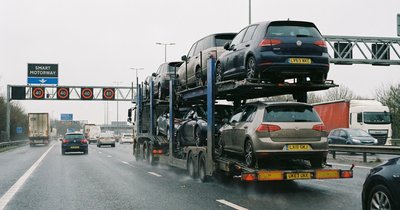
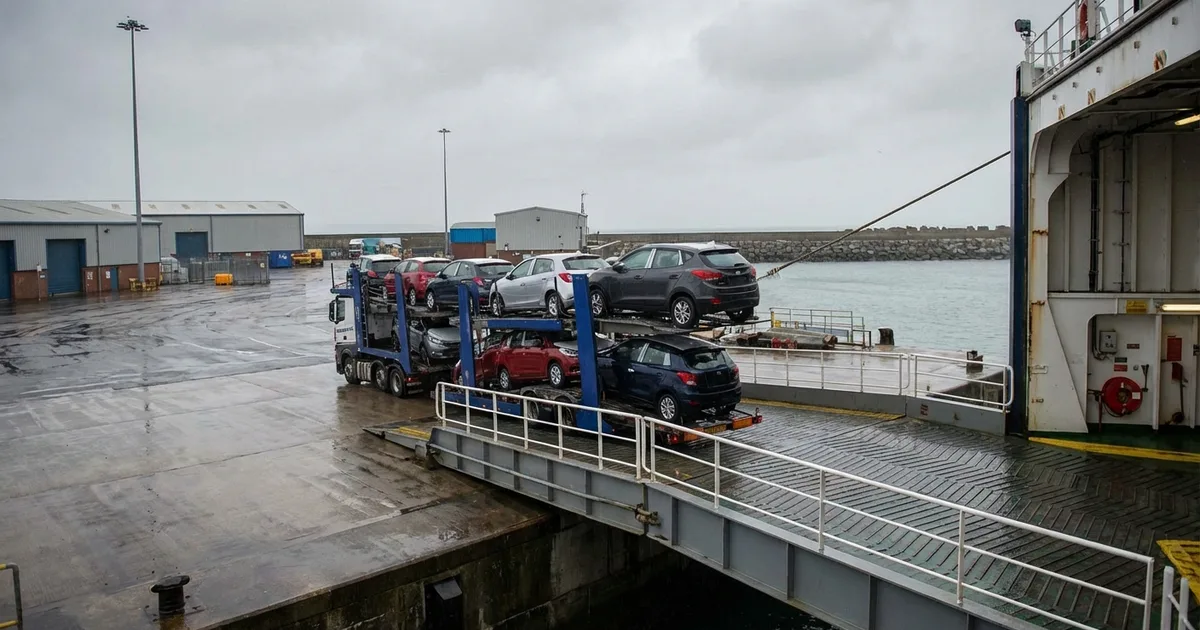
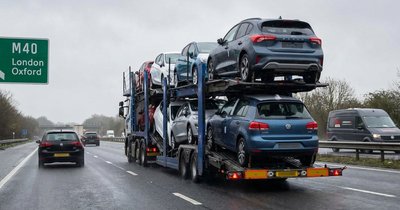
The most common method. Your car is loaded onto an open multi-car transporter, the same type of truck that delivers new cars from factories to dealerships. It is exposed to weather and road debris during transit, but for a standard road-registered car this is perfectly fine. Your car sits on the road every day in worse conditions.
Open trailer transport is typically 20 to 40% cheaper than enclosed. For a standard 200-mile job, if an open trailer quote comes in at £350, expect enclosed to be £490 to £560 for the same route. For everyday cars, hatchbacks, saloons, and family SUVs, open is the right choice.
Enclosed trailer
Your vehicle travels inside a fully sealed trailer. Full protection from weather, debris, and prying eyes. The cost premium is real, but for the right vehicle it is worth every penny.
Use enclosed transport for classics, luxury or high-value cars, modified or lowered vehicles, and anything in concours condition. For a vehicle worth over £20,000 or anything non-standard, always ask about enclosed. The cost difference compared to the asset value is modest. The protection difference is significant.
Driven on trade plates
A professional driver collects your car and drives it to the destination using trade plates. This is often the cheapest option for roadworthy vehicles, but it adds mileage. If you’re shipping a low-mileage car, that matters.
Verify the driver is fully insured under the trade plates before agreeing. The vehicle must have a valid MOT and be in reliable mechanical condition. This method is not suitable for non-runners or cars with known faults.
Flatbed or tilt-and-slide trailer
For non-runners, recently written-off cars, or anything that cannot be legally driven. The vehicle is winched or driven onto a flatbed and secured. No mileage added. This is the standard method for post-auction lots that need inspection or repair before they can be driven.
Be opinionated about your choice. Do not default to open trailer without asking whether your vehicle warrants something different. And do not pay for enclosed transport on a three-year-old Volkswagen Golf. Match the method to the vehicle.
What to check before booking any UK car transport company
This is where most guides fall short. They tell you to “look for experience” and “check reviews.” That is not actionable. Here are the specific things to verify before you hand over your keys or your money.
Goods in Transit insurance: verify the limit, not just the existence
All licensed UK car transport companies are legally required to carry Goods in Transit (GiT) insurance. But the existence of a policy is not the same as adequate coverage. A GiT policy with a £15,000 cap will not cover a £50,000 classic car. Ask for the insurer’s name, the policy number, and the coverage limit before you book. If they refuse, you have your answer.
GiT exclusions matter
Many GiT policies exclude pre-existing damage, non-road-legal vehicles, or modified cars. If your vehicle falls into any of these categories, ask specifically whether it is covered. Do not assume. A policy that excludes your vehicle type is the same as no policy at all.
Public liability insurance
This covers third-party damage during the transport operation. Legitimate companies carry it. Ask for confirmation. A blank stare or a subject change tells you more than any answer would.
Review depth, not just the score
When searching for the best car transport companies in the UK, check Trustpilot and Google Reviews, but look beyond the headline number. Fewer than 20 reviews is a thin track record. Focus on recency (reviews from the last 12 months matter, reviews from 2019 do not) and how the company responds to negative feedback. A company that argues with unhappy customers in public will argue with you too.
For reference, some of the top-rated UK vehicle shipping companies on Trustpilot in early 2026 include CDS Logistics (4.9 from 122 reviews), My Car Import (4.8 from 997 reviews), Ship Cars Ltd (4.7 from 61 reviews), and AutoShippers (4.7 from 74 reviews). Those review counts give you a benchmark for what a credible track record looks like.
Companies House verification
All commercial transport businesses should be registered at Companies House. You can check in 30 seconds. If a company is not registered, that does not automatically mean they are fraudulent, but it does mean you have no public record of who they are, when they started, or who runs the business.
Vehicle type experience
A company experienced with standard hatchbacks may not have the equipment for a lowered vehicle, a long-wheelbase van, or a vintage car with wire wheels. Confirm your specific vehicle can be accommodated before paying any deposit.
Written confirmation
Reputable UK car transport companies provide written confirmation of the quote, collection and delivery addresses, expected timeline, insurance details, and payment terms. Ask for this by email before paying any deposit. A company that operates on verbal agreements has no reason to honour them. Our car delivery service guide covers what a properly run collection-and-delivery booking looks like end to end.
Red flags that should make you walk away immediately
Knowing what good looks like is half the picture. Knowing what bad looks like keeps you from wasting money on operators who should not be trusted.
No written quote or contract. No paper trail means no recourse when things go wrong. Walk away.
Cash-only payment. Legitimate businesses accept bank transfer or card. Cash demands are a near-universal signal of an unregistered or uninsured operator.
“We’re insured” with no specifics. Ask for the insurer’s name and policy limit. A vague reassurance with no paperwork behind it is the same as no insurance at all.
Prices that feel too low. Underpriced quotes often reflect uninsured or unregistered operators willing to undercut the market because they carry none of the costs of legitimate compliance. Here is a simple test: if three quotes come back at £300 to £400 and one is £120, the £120 operator is cutting corners somewhere. Ask what is excluded. Ask about insurance limits. The gap between that quote and the others exists for a reason.
No company registration or verifiable address. Sole traders are fine. Anonymous listings with no traceable identity are not.
Pressure to book immediately. They will tell you the slot fills up today, or that the price increases tomorrow. Legitimate companies do not need to rush you. Urgency pressure is a manipulation tactic, not a sign of high demand. If they cannot give you 24 hours to decide, they are not confident their service holds up to comparison.
Any one of these on its own is enough to disqualify a company. Two or more together and you should not even respond to their quote.
How to compare car transport quotes in the UK
Calling three or four car transport companies one by one sounds thorough, but it makes real comparison almost impossible. Different quote formats, different inclusions, different timelines. By the time you reach the fourth operator, you have forgotten what the first one said. You end up choosing on gut feel, not evidence.
Marketplace platforms flip this. You post your job once, describe the vehicle and the route, and multiple verified transporters compete to win the work. This reverse-auction dynamic typically drives prices down 20 to 75% compared to a single direct quote. That is not a marketing claim. It is the structural result of transporters bidding for backhaul loads, filling empty truck space on return journeys that would otherwise earn them nothing.
When comparing car transport quotes in the UK, be specific about what you are comparing:
- Total price. Not the headline figure. Are there surcharges for fuel, congestion zones, or non-standard collection points?
- Transport method. Open versus enclosed, driven versus trailer. Make sure you are comparing like with like.
- Collection and delivery window. A specific date is not the same as “within 7 days.”
- Insurance coverage included. The limit, not just “yes we’re insured.”
- Fixed versus variable pricing. A quote that can change after booking is not a quote.
The comparison process also surfaces quality signals you cannot get from a single operator’s website. A transporter with 50 five-star reviews and a detailed profile is easier to trust than an anonymous quote with no track record. When you see five quotes side by side, the outliers become obvious.
Your next step: compare, don’t guess
You do not need to memorise any of this. You need to apply it once, for the vehicle you are moving right now.
The fastest way to do that is to post your job on TransportQuoteCompare. You describe your vehicle and route once. Verified car transport companies across the UK compete for the work. You compare quotes, profiles, and insurance details side by side, then choose the transporter that fits your requirements and your budget.
If you are also weighing up the cost question separately, our UK vehicle transport pricing breakdown shows the per-mile rates and surcharges that drive the headline figures.
No phone calls, no repeating yourself, no guessing whether the number you were given is fair.
Need a Transport Quote?
Compare quotes from verified UK transporters. Free and takes under 2 minutes.
Get Free Quotes