Touring Caravan Transport: Costs, Tips & How to Find a Hauler
Touring caravan transport costs between £1 and £3 per mile in the UK. For a 200-mile move, that means you could pay £200 or £600 for the exact same job. The difference comes down to whether you get one quote or several.
If you have been searching for caravan transport quotes and the numbers look terrifying, you are probably seeing static caravan prices. Static moves involve flatbed lorries and wide-load permits. Touring caravan transport is a tow job, and it costs a fraction of the price. This guide covers what a touring caravan move actually costs in the UK, how to prepare your caravan, what to check before booking, and how to get competing quotes so you pay a fair price.
Touring Caravan vs Static Caravan Transport: Why It Matters
If you have been searching “caravan transport” and seeing prices in the thousands, you are probably looking at static caravan figures. The two are not the same job.
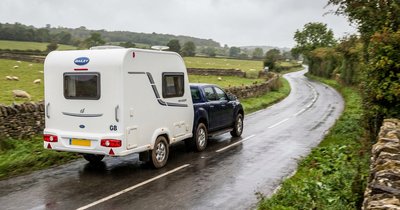
A touring caravan is designed to be towed on public roads by a vehicle with a weight-rated towbar. A professional hauler hitches your caravan to a large 4x4 or pickup truck and drives it to the destination. The caravan arrives on its own wheels. No flatbed, no crane, no escort vehicles.
A static caravan is a large, semi-permanent unit that requires a low-loader truck, police permits, and often escort vehicles to move. That is why static caravan transport costs £300 to £2,500 depending on distance, width, and route complexity. If you need to move a static caravan, that is a different guide entirely.
Touring caravan transport runs £1 to £3 per mile. The logistics are simpler, the equipment is lighter, and the cost reflects that. If you are getting terrifying quotes, check whether the company is quoting you for a static move.
When Do You Need a Touring Caravan Hauler?
With over 750,000 touring caravans on UK roads, according to the National Caravan Council, professional transport is not a niche service. The UK caravanning market was valued at USD $2.43 billion in 2024 and is forecast to reach $5.54 billion by 2030, according to Grand View Research. You do not need a towing problem to need a hauler. These are the five most common reasons owners book one.
Buying at a distance. You have found the right caravan at auction or from a private seller 200 miles away. You either do not have a tow vehicle, do not fancy a long and stressful tow through unfamiliar roads, or both.
Licence restrictions. Drivers who passed their test after 1 January 1997 hold a Category B licence only, which restricts the towing combination to under 3,500kg MAM. Many modern touring caravans paired with a tow vehicle exceed this limit. A professional hauler holds the correct licence category and has the right vehicle for the job.
Relocation or storage moves. You are moving your caravan to a new site, a different storage facility, or bringing it home for the winter.
Breakdown or recovery. Your caravan has suffered damage or a mechanical issue and cannot be safely towed. A hauler with recovery experience can collect and deliver it.
Events. Rallies, shows, and festivals. You want the caravan there without the drive.
How Touring Caravan Transport Works
You are handing a £20,000+ caravan to someone you have never met. This is what a professional job looks like, and what separates it from an amateur one.
Pre-transport condition documentation. A professional hauler photographs and videos the caravan before touching it. Every panel, every corner, the undercarriage. This establishes the baseline condition. If any damage occurs in transit, this documentation is your evidence. A hauler who skips this step is not worth booking.
Hitching and weight check. The hauler verifies that the nose weight and total towing combination weight fall within the tow vehicle’s rated capacity. This is not optional. An overloaded combination is illegal and dangerous.
Route planning. Height restrictions, bridge weight limits, and road width all need checking. Standard touring caravans rarely need the kind of route planning that static caravans require, but a professional hauler still checks rather than relying on a sat-nav.
Transport under Goods in Transit insurance. The caravan is towed to the destination under the hauler’s GIT insurance policy. This covers damage or loss while the caravan is in their care. More on insurance later.
Delivery and unhitching. The caravan is positioned at the destination and unhitched. A good hauler will walk you through the condition on arrival and compare it to the pre-transport documentation.
The key difference between a professional job and an amateur one: no condition documentation, wrong tow vehicle, no GIT cover. If any of those three are missing, walk away.
How Much Does Touring Caravan Transport Cost in the UK?
The standard pricing model is per-mile. The typical range is £1.00 to £3.00 per mile, with an average around £2.00 per mile. These figures come from DeliverMyMotor, one of the larger UK caravan transport operators.
That 3x spread between the cheapest and most expensive quote is real, and it is exactly why getting a single quote tells you nothing about whether the price is fair. Here is what different distances look like across the range:
| Distance | £1/mile | £2/mile (avg) | £3/mile |
|---|---|---|---|
| 50 miles | £50 | £100 | £150 |
| 100 miles | £100 | £200 | £300 |
| 200 miles | £200 | £400 | £600 |
| 300 miles | £300 | £600 | £900 |
| 400 miles | £400 | £800 | £1,200 |
Use this as your caravan transport cost calculator. Measure the distance between your pickup and drop-off postcodes, multiply by £2 for a mid-range estimate, and treat the £1 and £3 figures as your floor and ceiling. Actual quotes depend on your specific caravan and route.
For shorter storage moves under 50 miles, expect £50 to £200 as a typical range. Some operators apply a minimum charge on short hauls because the fixed costs of collection and delivery remain the same regardless of distance.
Longer journeys can work in your favour. Some operators drop to around £1.90 per mile for journeys over 150 miles, because the economics of the job improve with distance.
What pushes the price up
Larger caravans cost more to move. A twin-axle tourer is heavier and harder to manoeuvre than a lightweight single-axle. Peak summer season (June to August) brings higher demand during school holidays and the main caravanning season. Difficult access at either end, short notice bookings, and remote locations (rural Scotland, mid-Wales) all add cost. Any additional services like positioning the caravan on a pitch will be quoted separately.
What brings the price down
Longer distance, as noted above. Booking in the off-peak months from October to April gives you better availability and lower rates. Flexibility on your collection date helps the hauler plan efficient routes. Clear, easy access at both the pickup and drop-off locations removes any extra time from the job.
The bottom line: a 200-mile touring caravan move could cost you £200 or £600. That £400 gap is real money. The only way to know where your job sits in that range is to get multiple quotes.
Preparing Your Touring Caravan for Transport
A caravan that is not properly prepared can lead to damage, extra charges, and delays. Work through this checklist before your hauler arrives.
- Drain all water tanks. Fresh water, grey waste, and the toilet cassette. Water is heavy, and it sloshes during transit. That sloshing shifts the weight distribution and puts unnecessary stress on the chassis. Drain everything.
- Remove gas cylinders. Propane and butane cylinders should be removed for safety. If your hauler has a specific procedure for transporting secured gas cylinders, confirm it in advance. Otherwise, take them out.
- Secure all doors, lockers, and windows. Lock everything. If any locks are unreliable, tape them shut or use bungee cords. A locker door that flies open at 60mph on the M1 is a hazard and a damage risk.
- Clear the interior. Remove loose items: crockery, bedding, cushions, anything unsecured. Items shift during transit and cause internal damage. The hauler’s insurance covers the caravan structure, not your belongings.
- Check nose weight and Maximum Laden Mass. Ensure your caravan is within its MLM. Any remaining contents should be distributed correctly, with heavier items positioned over the axle. An overweight caravan is illegal to tow.
- Retract the awning and jockey wheel. Both must be fully secured for road travel. An unsecured awning will be destroyed and could damage the caravan or other road users.
- Document the condition. Take photographs and video of every exterior panel, every corner, and the undercarriage. Do this before the hauler arrives, not after. No photos means no evidence. No evidence means no claim if something goes wrong.
- Disconnect all utilities. If your caravan is on a site with electric hookup, mains water, or waste connections, disconnect everything fully before collection day.
Steps one through six protect the caravan. Step seven protects you. Do not skip it.
What to Check Before Booking a Hauler
Price matters, but it is not the only thing that matters. Before you hand over the keys, vet the hauler on these points.
| Check | Why it matters |
|---|---|
| Reviews | Check Google, Trustpilot, or the platform’s own review system. Look specifically for recent reviews that mention the condition of the caravan on delivery. |
| Tow personally or subcontract? | Some operators are brokers who pass jobs to subcontractors. Ask explicitly. You want to know who is actually towing your caravan and whether that person carries their own GIT cover. |
| Experience with your caravan type | A hauler who moves single-axle lightweight tourers every week may not be set up for a large twin-axle. Ask whether they have moved your size and weight of caravan before. |
| Pre and post-transport condition reports | A professional hauler will document the caravan’s condition at both ends. If they do not offer this as standard, that is a warning sign. |
| NCC or trade association membership | Not formal accreditation, but it signals that the operator takes the industry seriously enough to join a professional body. |
Now the non-negotiable: Goods in Transit insurance. GIT insurance covers your caravan against damage or loss while the hauler has it. Ask for proof of cover. Ask about the liability limit. If the hauler cannot produce a GIT certificate, do not book them regardless of the price.
GIT exclusions to know about. Most GIT policies exclude pre-existing damage, mechanical or electrical failure, and damage caused by faulty packing. Your pre-transport photos (step seven of the checklist above) are the protection against disputed claims about what was or was not pre-existing.
Check your own touring caravan insurance too. Your existing policy may or may not cover transport by a third party. Average touring caravan insurance starts from the low £100s per year for caravans valued up to £20,000, according to NimbleFins. That is a significant asset. Check your policy before the move, not after something goes wrong.
How to Find Touring Caravan Transport Near You (and Get Multiple Quotes)
There are two ways to find a touring caravan hauler, and they produce very different results.
The direct approach
Search “caravan transport near me,” find individual operators, and call each one for a quote. Named specialists include Hanson Caravan Transport, Schoones Caravan Transport, Elite Caravan Transport, Caravan Towing Services, and SafeTow. These are good operators. The problem is that calling each one individually is time-consuming, and you only reach the companies that rank well on Google. A large portion of the market consists of local operators who have no web presence at all.
The marketplace approach
Post your job once on a quote marketplace, providing your pickup and drop-off locations, caravan details, and preferred date. Transporters see the job and submit competing quotes. Platforms that offer this include Shiply, DeliveryQuoteCompare, ClickTrans, and TransportQuoteCompare.
The marketplace model works because the touring caravan transport market is fragmented. Single-operator specialists, general haulage companies, and local traders who never appear in search results all compete for the same jobs. A marketplace surfaces operators you would never find by searching Google, and the competition between them drives prices down. You can learn more about how the quote comparison process works on our explainer page.
DeliveryQuoteCompare claims users can save up to 75% compared to standard rates by comparing quotes through a platform. Your actual savings will depend on the job, but even a 20 to 30% reduction on a £400 to £800 move is worth the 10 minutes it takes to post.
The one action that protects you financially is getting multiple quotes. Post your touring caravan transport job on TransportQuoteCompare and see how the quotes compare to the estimates above.
Moving a touring caravan? Compare caravan transport quotes from specialist movers.
Need a Transport Quote?
Compare quotes from verified UK transporters. Free and takes under 2 minutes.
Get Free Quotes