How to Get a Car Home After Buying It Privately
You have shaken hands, the money has gone across, and you are holding the keys and a green V5C/2 slip. You now own a car you may not be allowed to drive a single mile. When you work out how to get a car home after buying it privately, the car’s MOT, tax and insurance decide the answer, not how far away you live or how keen you are to drive it.
Quick answer
If the car is road legal, insure it in your name, tax it, check the MOT is valid, then drive it home. If it fails any of those, won’t run, or is a long way off, it travels on a transporter or with a delivery driver instead.
Most guides on this stop at the first sentence because they are selling drive-away insurance. This one covers the cars that can’t simply be driven, and ends with a table that matches your car to a route.
Can you drive a car home after buying it privately?
Yes, if three things are in place before the first mile. According to GOV.UK’s new keeper guidance, you need insurance in your own name, vehicle tax in force, and a valid MOT once the car is 3 years old. Miss any one of them and you are driving illegally from the seller’s kerb.
Insurance. GOV.UK puts it bluntly: “You must have insurance before you can use your vehicle on the road.” The seller’s policy does not protect you, because cover follows the driver and the policyholder, as Selectra’s guide to driving a used car home explains. Short-term drive-away cover is the usual fix if your annual policy isn’t ready yet.
Tax. GOV.UK says “You need to tax the vehicle before you can use it on the road”, and the green new keeper slip (V5C/2) gives you the reference to do it online on the spot through the GOV.UK vehicle tax page. The same page warns you may need evidence of an MOT that is valid when the tax starts, so a car with no MOT usually can’t be taxed at all.
MOT. GOV.UK requires an MOT every year once a car is 3 years old. Check the expiry date before you agree a price, not after. If it has run out, the drive home is off and so, in practice, is the tax.
Before you pay, check the logbook. The seller’s name and address should match the V5C, and you should leave with the green new keeper slip. A seller who can’t produce a logbook is a reason to walk away. If you go ahead anyway, a replacement V5C costs £25 from DVLA, according to GOV.UK.
If insurance, tax and MOT are all in place, you still have more than one way to get it home.
How to get a car home after buying it: the four options
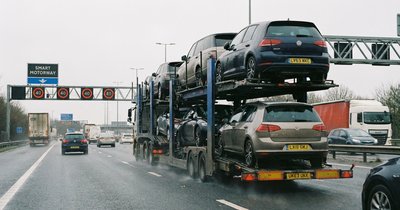
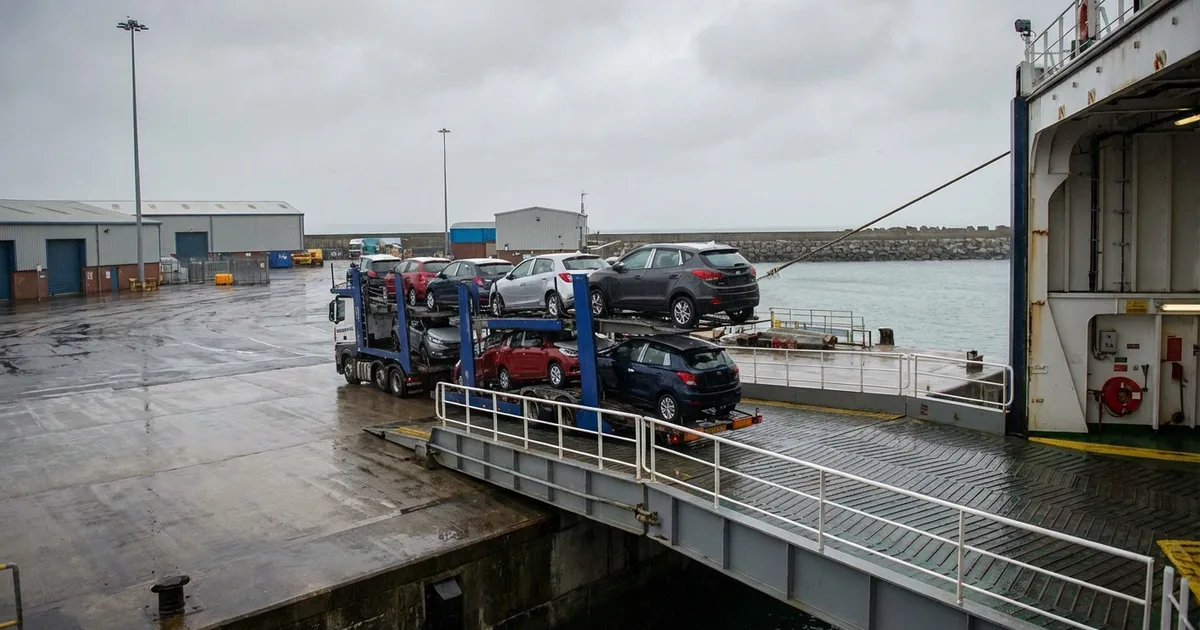
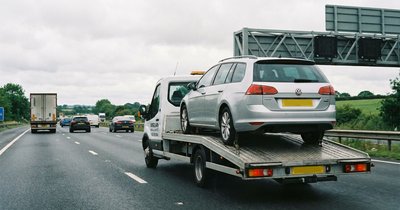
There are four ways to get a privately bought car home in the UK. You can collect it and drive it on drive-away cover, ask the seller to deliver it, hire a driver-delivery service to drive it to you, or book a car transporter to carry it on an open or enclosed trailer. Only the transporter works for every car, whatever its MOT, tax or mechanical condition.
1
Collect and drive it yourself
Insure it, tax it and drive it home. This is the cheapest route when the car is road legal and close by, as long as you can get to the seller and back in a day without it costing more than a transporter.
2
Ask the seller to deliver
Some private sellers will, especially for a local sale. They are under no obligation to. If one offers, get it agreed in writing and ask how they are insured for the trip.
3
Hire a driver-delivery service
A professional driver collects the car and drives it to your door. It suits a roadworthy car when you can’t spare the day, though the car still covers every road mile itself.
4
Book a car transporter
The car is loaded onto an open or enclosed trailer and never turns a wheel on the road. It handles expired MOTs, SORN cars and non-runners as easily as healthy ones.
Our view, as a marketplace where transporters quote for these jobs: for anything more than a few hours’ drive, a car transporter usually wins on hassle even when it loses on headline price. A trailer means you skip the train fare and the day off work. It also spares you 150 miles in a car you have owned for twenty minutes.
Those four assume a car with its paperwork in order. The harder question is what to do when it isn’t.
When you can’t drive it home: no MOT, SORN, non-runner or too far
A car with an expired MOT can’t be driven on public roads except to a pre-arranged MOT test or to or from somewhere it is being repaired, according to GOV.UK’s MOT guidance. Being caught outside those two exceptions can lead to prosecution. Tax and insurance still apply on either journey, so neither exception is a free pass home.
MOT expired
Both GOV.UK exceptions need a genuine booking or repair arrangement at the other end. “I’m driving it home to sort it later” is neither.
SORN
A SORN car can only go on a public road to or from a pre-booked MOT or testing appointment. Other use risks prosecution and a fine of up to £2,500, according to GOV.UK.
Non-runner or project
This isn’t a driving question at all. You need a transporter with a winch or loading gear to get it on the trailer.
Too far away
A long collection costs you a train fare and most of a day before the drive home even starts.
Getting a SORN car off SORN. Taxing the car cancels the SORN automatically, according to GOV.UK. That only helps if the MOT is valid, because you may need one to tax it, and insurance in your name still applies. No valid MOT means no tax, and the transporter is the route.
Non-runners. Seized brakes, a flat battery and missing wheels all change the job. Tell each transporter exactly what works and what doesn’t, because that decides which vehicles can load it.
Distance. A motorway breakdown on your first drive in an unfamiliar car is a bad start to ownership. We priced a typical long collection in how much it costs to transport a car 200 miles.
If the MOT has expired, don’t gamble on the repair exception to save a transporter fee. The fine and prosecution risk dwarf the saving, and a trailer removes the question completely. Post the job and compare transporter quotes before collection day.
Used car delivery costs compared
Used car delivery in the UK costs very different amounts depending on the route. Drive-away cover starts from about £19 a day according to Dayinsure’s published pricing, before fuel and a train fare. Car transporters charge roughly £0.90 to £1.30 a mile over long distances and about £2 a mile under 50 miles, according to published figures from Shiply and Airtasker.
| Route | Typical cost | What it doesn’t include |
|---|---|---|
| Drive-away cover, collect it yourself | From about £19 a day (Dayinsure) | Fuel, a one-way train fare, vehicle tax, your day off |
| Seller delivers it | Free or a fuel contribution, by agreement | Any guarantee they’ll do it, or clarity on their insurance |
| Driver-delivery service | No reliable published rate; ask for a quote | Tax, insurance and MOT, which the car still needs |
| Car transporter, long distance | About £0.90 to £1.30 a mile (Shiply, Airtasker) | Extras such as enclosed trailers or winching a non-runner |
| Car transporter, under 50 miles | About £2 a mile (Shiply, Airtasker) | Same extras as above |
| Dealer home delivery (dealer sales only) | From £149 (Stratstone) to £199 (Car Supermarket) | Not available when you buy from a private seller |
That last row explains why searching “used car home delivery” mostly turns up dealer listings. Dealers bundle delivery into the sale. A private seller has no such service, so you arrange the move yourself.
Worked illustration, not a quote: a 200-mile move at £0.90 to £1.30 a mile comes to £180 to £260 (200 × £0.90 = £180; 200 × £1.30 = £260). To compare it fairly, add up the drive-home bill yourself: one day of drive-away cover from about £19, a one-way train fare to the seller, fuel for 200 miles in your new car, and a day off work. If those four come to less than £180 and the car has a valid MOT, drive it. If they come close, the transporter costs you about the same and gives you the day back. It also removes the risk of breaking down on the M6 in a car you’ve owned for an hour. Our full guide to UK car transport costs breaks the per-mile rates down further.
Prices are taken from the publishers’ own pages and may have changed since, so check the linked page before relying on them. They are shown with “from” or “about” because they move. TransportQuoteCompare does not set transporter prices. Fuel and train costs depend on your car and route, so price them yourself.
Which route fits your car: a decision table
The right way to get a privately bought car home depends on two things: its legal status and the distance. Short means you can get there and back in an afternoon. Long means a train there and most of a day. A road-legal runner close by should be driven home on drive-away cover. A car with an expired MOT, a SORN or a fault that stops it running should go on a transporter, because GOV.UK rules restrict driving it on public roads.
| Your car’s situation | Best route | Why |
|---|---|---|
| Valid MOT, runs, can be taxed, short distance | Collect it on drive-away cover | Cheapest option, and insurance, tax and MOT are all in place |
| Valid MOT, runs, long distance | Transporter or driver-delivery service | Saves a train fare, a lost day and a long first drive |
| MOT expired | Transporter | GOV.UK only allows driving to a booked test or a repair. “Home” isn’t either. |
| SORN | Tax it first if it has a valid MOT; otherwise transporter | Taxing cancels the SORN, but you may need a valid MOT to tax it, and insurance still applies |
| Non-runner or project car | Transporter (enclosed if valuable or low-slung) | It needs loading gear, not a driver |
| Seller offers to deliver | Fine, with conditions | Agree it in writing and ask about their insurance |
Decide the route before you pay the deposit, not after. Once the money has moved, the seller has less reason to wait for you.
Booking a transporter for a privately bought car
To get an accurate quote for transporting a privately bought car, give each transporter the collection and delivery postcodes, whether the car runs, whether it has keys and all four wheels, and when the seller can hand it over. Leave any of these out and the price you were quoted may not be the price you pay on the day.
- Collection postcode and delivery postcode
- Does it start, steer and brake?
- Keys present and all four wheels on
- Seller’s available days and who hands over the keys
- Open or enclosed trailer
- V5C/2 slip and paperwork stay with you, not the driver
- Ask the driver to photograph the car at collection and at delivery
Open or enclosed? An open trailer is cheaper and fine for most used cars. Pay for enclosed if the car is valuable, classic or sits low enough to catch on a ramp.
Cover. Ask each transporter about goods-in-transit insurance and get the cover limit confirmed in writing before you accept.
How TransportQuoteCompare fits. You post the job once, UK transporters send quotes, and you compare them and choose who to hire. We don’t sell cars and we don’t move them ourselves. If you want the car brought straight to your door, start with our car delivery service page.
Before you hand over the money
Check three things before you pay: insurance in your name, tax you can set up on the spot, and a valid MOT. If it passes all three and it’s close by, drive it home. Fail any of them, or face a long drive in a stranger’s car, and a transporter is the safer route. Post the job once and compare transporter quotes.
Last checked: November 2026 · Written by the TransportQuoteCompare team. Legal points summarise GOV.UK guidance; check the linked pages for your own situation.
Bought a car you can’t drive home? Post your job once.
Compare quotes from UK car transporters for runners, non-runners, SORN and no-MOT cars. Free to post, and you choose who to hire.
Get free quotesNeed a Transport Quote?
Compare quotes from verified UK transporters. Free and takes under 2 minutes.
Get Free Quotes