Car Transport UK to Ireland: Routes, Costs & Ferry Options
Before you call a single transporter, answer this: is the car going to the Republic of Ireland, or to Northern Ireland? It sounds like a minor detail. It is not. That one answer determines your ferry route, your total cost, and whether you will need to clear post-Brexit customs before the keys change hands.
This guide covers the full picture. The Republic vs Northern Ireland distinction, all four main ferry crossings, the real cost of post-Brexit import duties for Republic-bound vehicles, what professional car transport UK to Ireland actually includes, and how to get competing quotes without calling six companies one by one.
Republic of Ireland or Northern Ireland? This Decision Changes Everything
If the car is going to Northern Ireland, the process is identical to moving a vehicle anywhere else within the UK. Northern Ireland is part of the United Kingdom. No customs formalities for GB-originating vehicles, no import duty, no VAT, and no Vehicle Registration Tax. The car stays on DVLA registration. Your transporter collects it, puts it on the ferry (typically Cairnryan to Belfast), and delivers it. Done.
If the car is going to the Republic of Ireland, you are crossing an EU customs border. Since Brexit, every vehicle originating in Great Britain that enters the Republic requires full customs clearance. That means a customs declaration filed through the Automated Import System (AIS), customs duty of 10% on the declared vehicle value, Irish VAT at 23% applied to the vehicle value plus duty plus transport costs, and Vehicle Registration Tax (VRT) assessed by Irish Revenue at 7% to 37% of the vehicle’s Open Market Selling Price based on its CO₂ emissions band.
The vehicle must be registered in Ireland within 30 days of arrival. Miss that deadline and you face penalties.
For anyone arranging car transport Northern Ireland to Republic of Ireland, or buying a UK car for import south of the border, those fiscal costs stack on top of the purchase price and transport fee. Which Ireland? Answer that first.
The Four Main Ferry Routes and Which One Your Transporter Will Use
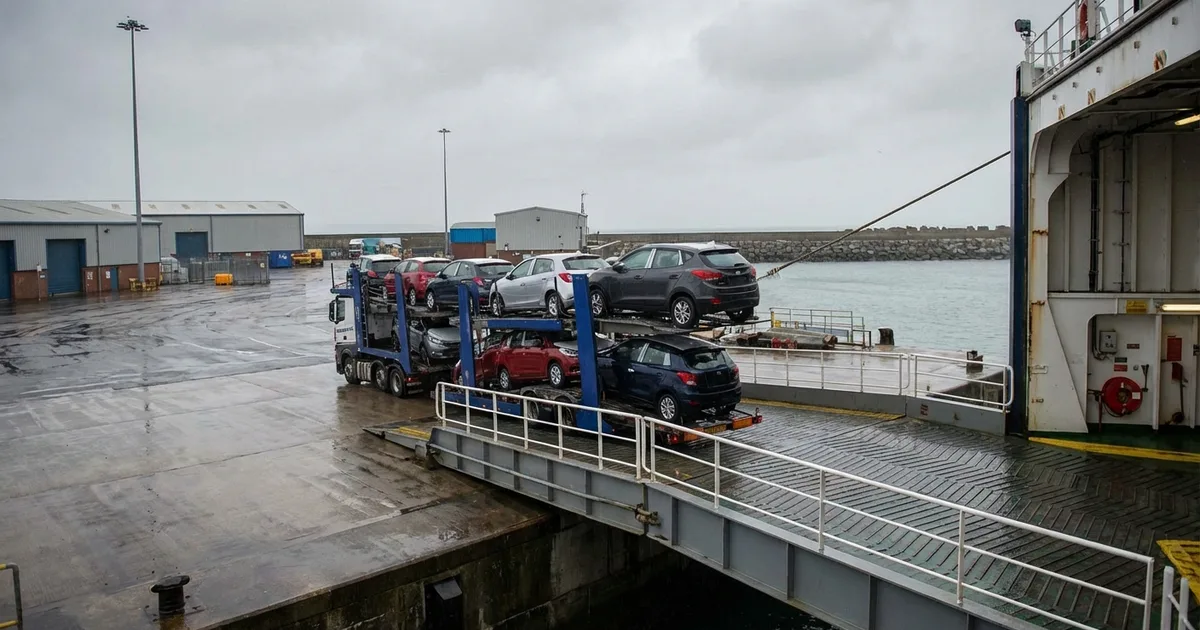
Once you know the destination, the ferry route follows logically. Your transporter chooses the crossing based on where in the UK the car is being collected and where in Ireland it needs to arrive. The transporter handles the ferry booking, not you.
Holyhead to Dublin
If the car is heading to Dublin or anywhere in the eastern half of the Republic, this is almost certainly the route your transporter will take. Irish Ferries and Stena Line operate roughly 8 sailings per day, with a crossing time of about 3 hours 15 minutes. It suits collections from the Midlands, North West England, North Wales, and most of Southern England.
Cairnryan to Belfast
The fastest crossing. Around 2 hours 15 minutes, with up to 6 sailings per day on Stena Line and P&O Ferries. If you are in Scotland or Northern England and the car is heading to Northern Ireland, this is your route. For Republic-bound vehicles, the transporter would need to drive south from Belfast afterwards, which adds time and cost compared to sailing from a Welsh port.
Pembroke to Rosslare
Best for collections from South Wales and the South West of England. Irish Ferries operates approximately 2 sailings per day, with a crossing time of about 4 hours. Rosslare sits in the south-east corner of Ireland, making this the efficient choice for deliveries to Wexford, Waterford, Cork, and the southern counties.
Fishguard to Rosslare
Stena Line runs this route with around 2 sailings per day and a crossing time of roughly 3 hours 30 minutes. It covers a similar catchment to Pembroke. The slower option of the two Rosslare crossings, but sometimes the better fit depending on schedule and availability.
Liverpool to Dublin overnight services also exist, but these are commercial freight crossings (8 to 9 hours). They are not typically relevant for moving a single car.
For reference, a ferry ticket for a car and driver costs approximately £100 to £150 one way on these routes. That figure matters if you are considering driving the car yourself. Professional transporters cross on freight lanes at commercial rates.
| Route | Crossing time | Sailings per day | Destination |
|---|---|---|---|
| Holyhead – Dublin | ~3 hrs 15 min | ~8 | Republic of Ireland |
| Cairnryan – Belfast | ~2 hrs 15 min | Up to 6 | Northern Ireland |
| Pembroke – Rosslare | ~4 hrs | ~2 | Republic of Ireland |
| Fishguard – Rosslare | ~3 hrs 30 min | ~2 | Republic of Ireland |
Post-Brexit Import Costs: What It Really Costs to Bring a GB Car into the Republic
This section only applies if the car is going to the Republic of Ireland. If the destination is Northern Ireland, skip ahead.
Before January 2021, vehicles moved freely between Britain and the Republic. That is no longer the case. Three layers of cost now stack on top of the purchase price and transport fee for any GB-origin vehicle entering the Republic.
Customs duty: 10% of the declared vehicle value. This is the standard rate for vehicles imported from outside the EU. However, there is an important exception. If the vehicle qualifies under the UK-EU Trade and Cooperation Agreement rules of origin, the 10% duty may be waived. This applies to vehicles manufactured in the UK (Jaguar, Land Rover, Nissan built at Sunderland, Vauxhall) and many EU-built cars that were previously exported to the UK market. Your customs broker can advise on eligibility.
Irish VAT: 23%. This is applied not just to the vehicle value, but to the vehicle value plus the customs duty plus the transport costs. It compounds.
Vehicle Registration Tax (VRT): 7% to 37% of OMSP. Irish Revenue assesses the vehicle’s Open Market Selling Price independently. They do not use the UK purchase price. The VRT rate depends on the vehicle’s CO₂ emissions band, ranging from 7% at the cleanest end to 37% for the highest emitters. The vehicle must be presented at an NCTS centre for VRT assessment, and the tax must be paid within 30 days of arrival.
The total uplift compared to pre-Brexit? Take a car purchased for £10,000 in the UK. Customs duty at 10% adds £1,000. Irish VAT at 23% is applied to the vehicle value plus duty plus transport costs, roughly £2,600. Then VRT: at a mid-range CO₂ band of 18%, Irish Revenue’s OMSP assessment could add another £1,800 or more. That is over £5,000 in fiscal costs before the car turns a wheel in Ireland. Run these numbers before you commit to the purchase, not after.
One more detail worth knowing: vehicles that were registered in Northern Ireland before 1 January 2021 have a different status. They are not subject to the same duty and VAT when imported to the Republic, provided the owner can supply proof of NI registration. A narrow exception, but it matters for cross-border buyers in that specific situation.
The Irish Revenue VRT portal has the full rate tables and OMSP lookup tool.
Professional Car Transport vs DIY Ferry: What You Are Actually Paying For
You have two options for getting a car from the UK to Ireland. Each suits a different situation.
Drive it yourself. You travel to the UK, collect the car, drive to one of the ferry ports listed above, and take a roll-on roll-off ferry to Ireland. The ferry ticket costs approximately £100 to £150 one way for a car and driver. Cheapest in pure transport terms. The trade-off is your time: the journey to the UK, the drive to port, the crossing, and the drive to your final destination. For someone who lives near the collection point or enjoys a road trip, it works. For everyone else, it is a full day or more of logistics plus return travel to arrange.
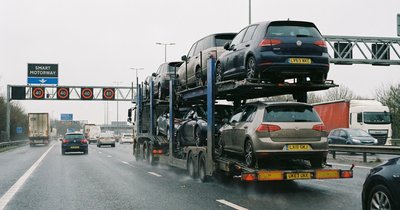
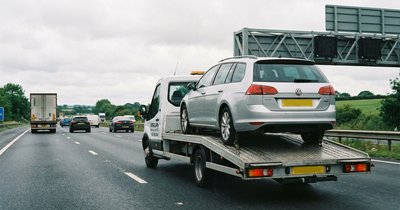
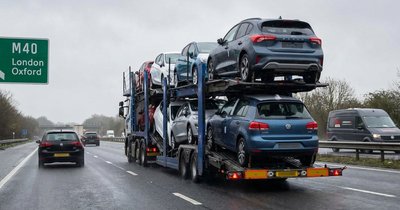
Use a professional transporter. A car transport company collects the vehicle from any UK address, loads it onto a carrier (open is standard, enclosed is available for high-value or non-running vehicles), crosses on a freight ferry lane, and delivers to any address in Ireland. No travel required on your part. The car arrives at your door.
How much does car transport UK to Ireland cost through a professional service? Based on marketplace data, expect quotes in the range of £200 to £500 for a standard car on a route like London to Dublin. The exact price depends on collection distance, vehicle type, whether the car is running, and how much lead time you give. The market is fragmented, dominated by established family operators like Eirtrans (15+ years), Costello Auto Trans (since 1996), and Woodside Motorfreight (50+ years). None publish fixed tariffs. The only way to know your price is to get quotes.
Enclosed transport for high-value vehicles costs more. Non-runners that need a winch onto the trailer cost more. And the spread between operators on the same route can be significant, especially when one transporter already has a return journey planned and can offer backhaul pricing.
How to Get Competing Quotes for UK to Ireland Car Transport
To get an accurate quote, you need to provide: the vehicle make, model, and year; the collection postcode in the UK; the full delivery address in Ireland (Eircode if possible); your preferred collection and delivery dates; whether the vehicle is running; and any special requirements such as oversized dimensions, modifications, or high declared value.
When quotes come back, compare more than just the headline price. Check whether the quote includes insurance coverage and what the limit is. Ask whether the transporter handles customs paperwork for Republic-bound vehicles or leaves that to you. For anyone importing to the Republic, this matters: a transporter who manages the AIS customs declaration saves you a significant headache. Confirm the transit time estimate and whether the quoted price is fixed or subject to fuel surcharges.
The biggest mistake buyers make is getting a single quote and accepting it. The car transport market between the UK and Ireland is fragmented enough that the first operator you find may not be anywhere near competitive. Prices vary because each transporter has different route schedules, different capacity on a given week, and different overhead structures. A transporter returning empty from a Dublin delivery run will quote significantly less than one making a dedicated trip.
TransportQuoteCompare lets you post the job once and receive competing quotes from verified UK-Ireland transporters. Describe the vehicle, the pickup, and the destination. Compare prices, insurance details, and reviews side by side. Choose the transporter that fits.
Get Your Car to Ireland
The price gap between operators on the same route can be hundreds of pounds. If the car is heading to the Republic, budget for customs duty, VAT, and VRT before you do anything else. Those costs are not optional and they are not small. Honestly, most people underestimate VRT by at least half. If the destination is Northern Ireland, it is as simple as any domestic UK vehicle move.
Either way, let transporters compete for the job. That is how you find a fair price in a market with no published tariffs.
Post your job on TransportQuoteCompare, get free quotes from verified UK to Ireland car transporters, and choose the one that fits your timeline and budget.
Shipping a car further afield? Compare international car shipping quotes for Europe, Australia, the USA and beyond.
Need a Transport Quote?
Compare quotes from verified UK transporters. Free and takes under 2 minutes.
Get Free Quotes