How Often Should You Take Breaks When Driving Long Distances?
At 70mph, a four-second microsleep carries your car 125 metres with nobody at the wheel. No braking, no steering correction, no warning. The driver does not feel it happening. They do not remember it afterwards. This is what driver fatigue actually looks like, and it is why how often you take breaks when driving long distances is not a casual question.
Most drivers think they know when they are too tired to drive. The research says otherwise. Fatigue impairs your reactions before you feel sleepy, and the most dangerous form of it, microsleep, happens without any conscious awareness at all. The UK has a specific, evidence-based standard for break frequency. It is written into the Highway Code. And the data behind it, from RoSPA and the Department for Transport, makes a strong case for treating that standard as the floor rather than the target.
If you are planning a long drive to collect a vehicle, tow a caravan home, or relocate across the country, these are the numbers and the rules you need before you set off.
How Long to Drive Before a Break: What UK Highway Code Rule 91 Says
Highway Code Rule 91 states that you should take a minimum break of at least 15 minutes after every two hours of driving. That is the official UK recommendation, not a suggestion from a road trip blog or an American law firm.
Rule 91 goes further than just break frequency. It also says you should not begin a journey if you are already tired. Avoid driving between midnight and 6am, when natural alertness is at its lowest. And if you feel sleepy mid-journey, stop in a safe place. Not the hard shoulder. Not an emergency area. A proper lay-by or motorway services.
Two hours is the minimum. Road Safety Scotland advises no more than 7.5 hours of total driving in a single day, regardless of how many breaks you take. For journeys that exceed that, an overnight stop is the responsible option. Anyone collecting a car from the other end of the country should factor this into their planning before assuming they can do the return leg the same day.
One myth that needs killing: opening windows, turning up the radio, and talking to a passenger are not fatigue countermeasures. They are distractions. They might keep you occupied for a few minutes, but they do nothing to reverse the physiological impairment that fatigue causes. The only effective emergency countermeasure is the coffee nap, which Rule 91 recommends by name. More on that below.
Driver Fatigue UK: What the Crash Data Actually Shows
Official Department for Transport figures say fatigue contributes to roughly 4% of fatal road collisions. That number is almost certainly wrong. Fatigue is notoriously difficult to prove after a crash. There is no breathalyser for tiredness. RoSPA estimates the real figure is far higher: up to 20% of all road crashes and up to 25% of fatal and serious collisions. One in four of the most devastating incidents on UK roads.
What makes fatigue crashes disproportionately deadly is the mechanics of what happens. A tired driver does not brake. They do not swerve. The vehicle hits whatever is in its path at full speed. RoSPA data shows fatigue-related crashes are approximately 50% more likely to result in death or serious injury than other types of collision. No evasive action, no chance to correct.
In 2022, there were an estimated 1,300 fatigue-related injury collisions in Great Britain. One in eight UK drivers have fallen asleep at the wheel at least once, according to the road safety charity Brake. Forty percent of sleep-related crashes involve commercial or fleet drivers. If you are collecting a work vehicle or driving a long return leg after dropping off a car, caravan, or trailer, that statistic is about you.
Fatigue sits alongside drink-driving and speeding as one of the leading causes of fatal road collisions in the UK. The difference: drink-driving gets public campaigns and police enforcement. Fatigue gets a leaflet at the services. Nobody is going to stop you from driving tired, which is why the 2-hour break rule has to be self-enforced.
Signs of Driver Fatigue: How to Tell You Need to Stop
Your body warns you before a microsleep happens. The physical signs are the ones most people recognise: frequent yawning, heavy or stinging eyes, your head nodding forward. You have difficulty keeping your eyes open, and you catch yourself fidgeting and shifting position as your body fights the drowsiness. Most drivers have experienced these and pushed on anyway, telling themselves they will stop at the next services.
Cognitive signs are more alarming because they indicate deeper impairment. You miss your junction and cannot explain why. Road signs pass without registering. Your lane position drifts, or you clip the rumble strip on the hard shoulder. When the car in front brakes, your reaction feels sluggish, a beat too slow. And then there is the most unsettling one: memory gaps. You reach a section of motorway and realise you cannot remember the last few miles. You were driving, but you were not processing.
Microsleep makes all of this worse. These involuntary sleep episodes last between 2 and 30 seconds, and the driver does not choose to close their eyes. They are not aware it happened. As fatigue deepens, the episodes increase in frequency and duration. One becomes two, then three. By the time you catch yourself jolting awake, you may have already had several you never noticed.
If you notice any of these signs, you are already impaired. Stop. Do not try to push through to the next services. Pull over at the nearest safe location and take a proper break.
The Coffee Nap: The Only Emergency Fix That Actually Works
This is not a Reddit hack or a wellness trend. The coffee nap is recommended by name in Highway Code Rule 91 as the most effective emergency countermeasure for driver fatigue.
Caffeine takes approximately 20 minutes to cross the blood-brain barrier and start blocking adenosine receptors. Adenosine is the chemical that builds up in your brain during waking hours and makes you feel sleepy. By sleeping first, you clear some of that adenosine naturally. When the caffeine kicks in 20 minutes later, it has fewer receptors to compete with. The two mechanisms stack. You wake up significantly more alert than either a nap or a coffee alone would achieve.
Pull over at motorway services or a safe lay-by. Drink one to two cups of strong coffee or a caffeinated energy drink. Set an alarm for 15 to 20 minutes. Close your eyes and sleep. When the alarm goes off, the caffeine is starting to work. Drive on.
One critical caveat: this is an emergency measure, not a journey planning strategy. A coffee nap buys you one to two hours of improved alertness. It does not replace the 2-hour break rule. It does not replace getting adequate sleep before a long drive. And it does not work a second time on the same journey. If you need a coffee nap, your body is telling you something. Listen to it.
Cold water on the face, fresh air from an open window, loud music. None of these work. They distract you from the sensation of tiredness without reversing the impairment. The coffee nap is the only technique with genuine evidence behind it.
How Often to Take Breaks on Long Drives: A Practical Schedule
Use this table as a starting point, applying Highway Code Rule 91 to real journey lengths. If you feel any of the warning signs listed above, stop sooner.
| Journey length | Minimum stops | Suggested schedule |
|---|---|---|
| Up to 2 hours | 0 (monitor fatigue) | Drive through if well-rested |
| 2–4 hours | 1 | Stop at the 2-hour mark for 15–20 minutes |
| 4–6 hours | 2 | Stop at 2-hour and 4-hour marks |
| 6–8 hours | 3 | Stop at 2-hour, 4-hour, and 6-hour marks |
| 8+ hours | Consider overnight | 4+ stops minimum; overnight rest strongly preferred |
For context, professional HGV and coach drivers are legally limited to 4.5 hours of continuous driving before they must take a 45-minute break. They are also capped at 9 hours of driving per day. These are not suggestions. They are EU and UK regulations enforced with tachographs and penalties. Private motorists are not bound by the same rules, but the safety science behind them applies equally to anyone behind the wheel.
Road Safety Scotland recommends no more than 7.5 hours of driving in a single day. Mark your planned stops on Google Maps before you set off, and if your journey exceeds that limit, plan an overnight stop.
When Breaks Aren’t Enough: The Case for Vehicle Transport
Consider the scenario many TransportQuoteCompare users face. You have bought a car from a seller 300 miles away. You are driving solo. There is no co-driver to share the wheel or spot the early warning signs of fatigue. Most of the route is motorway, which means monotonous, low-stimulation driving. Solo driver, long distance, repetitive road: that is the highest-risk combination for fatigue.
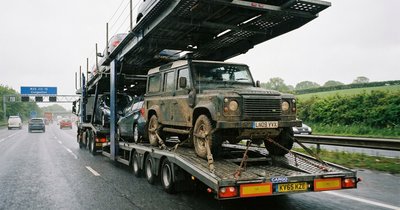
When you factor in fuel, two or three motorway services stops with overpriced food and coffee, the time cost of a full day behind the wheel, and potentially a hotel if the distance demands an overnight, the cost of driving it yourself adds up faster than most people expect. Professional vehicle transport eliminates the fatigue risk entirely. The car, caravan, or motorbike arrives at your door. You do not drive a mile.
TransportQuoteCompare lets you post a transport job in minutes. Verified transporters across the UK see the job and quote for the work. You compare prices, timelines, and reviews, then choose the option that fits. For journeys where the break schedule above starts looking like a full-day ordeal, it is worth getting a quote before committing to the drive.
If your next long journey is to collect a car, caravan, or bike from across the country, get a transport quote before you commit to the drive. The numbers are often closer than you would expect, and the fatigue risk is real.
Need a Transport Quote?
Compare quotes from verified UK transporters. Free and takes under 2 minutes.
Get Free Quotes