To compare static caravan insurance properly, check five things: the cover basis (new-for-old or market value), the sum insured, the public liability limit your park demands, the excess, and — if there is any chance you will ever move the caravan — whether the policy covers it in transit. Typical premiums run £150–£400 a year.
Most comparison guides stop at the first four. The fifth is the one that catches owners out, because a static caravan policy insures a structure at a fixed address — and the moment that structure goes on the back of a lorry, you are in a coverage grey zone that neither your park policy nor the transporter’s standard liability fully fills. This guide covers the standard comparison points first, then the transit gap in detail.
One thing to be clear about upfront: TransportQuoteCompare is not an insurance broker and does not sell or arrange insurance. What follows is editorial guidance to help you compare policies yourself. Where we can help directly is the transport side — if you are moving a static caravan, you can compare transport quotes from specialist movers.
What Static Caravan Insurance Actually Covers
A static caravan policy is closer to home insurance than to touring caravan insurance. There is no road risk element because the caravan has no road-legal axles — it lives on a pitch. A standard policy covers:
- The structure — storm, flood, fire, theft, vandalism, and (on better policies) accidental damage to the caravan itself
- Contents — furniture, appliances, and personal possessions kept inside, usually with a per-item limit
- Public liability — injury or damage claims from guests, visitors, or park neighbours, typically £1m–£5m of cover
- Loss of use / alternative accommodation — costs if the caravan becomes uninhabitable after an insured event
- Debris removal and re-siting — clearing a destroyed caravan and craning a replacement onto the pitch, which can run to thousands on its own
Extras worth checking rather than assuming: decking and verandas (often insured separately or up to a capped amount), sheds and storage boxes, and cover for letting the caravan to paying holidaymakers — standard policies frequently exclude commercial letting unless you declare it.
Static caravan insurance is not a legal requirement. But your park almost certainly makes it a contractual one — more on that below.
New-for-Old vs Market Value: The First Thing to Compare
This single choice moves your premium and your payout more than anything else, so get it right before comparing prices.
New-for-old means that if the caravan is damaged beyond economical repair, the insurer replaces it with a brand new unit of the same or equivalent model. To qualify, you must insure the caravan at full replacement cost — what a new equivalent would cost today — not at its current second-hand value, as specialist insurer Leisuredays explains. Insure a £40,000-to-replace caravan for its £18,000 market value and you will not get a new one when it burns down.
Market value pays out what the caravan was worth immediately before the loss, allowing for age and condition. The premium is lower because the potential payout is lower.
The catch with new-for-old is age eligibility, and it varies widely between insurers:
| Insurer (example) | New-for-Old Age Limit |
|---|---|
| Leisuredays | Caravans up to 15 years old (park block schemes may differ) |
| Compass | Structures up to 35 years old (older considered case by case) |
That 20-year difference is exactly why comparing matters. If your caravan is 18 years old, one insurer offers you new-for-old and another quietly downgrades you to market value. Two quotes with identical premiums can carry completely different payouts.
What Your Park Requires (And What It Can’t Force)
There is no law obliging you to insure a static caravan. In practice, nearly every UK holiday park requires insurance to a defined minimum standard as a condition of your pitch licence agreement, with proof of cover provided annually, according to the National Association of Caravan Owners (NACO).
Three things to know before you compare:
- You do not have to use the park’s own scheme. Many parks run block insurance schemes and will offer (sometimes push) them at purchase. You are entitled to insure elsewhere, provided your policy meets the minimum standard in your pitch agreement.
- Some parks charge a verification fee if you insure independently — an administration charge for checking your documents. If it applies, it should be spelled out in your pitch licence agreement. Factor it into the comparison: a £30 fee on top of a cheaper independent policy may still beat the block scheme.
- Check the minimum public liability limit. Parks commonly specify £1m, £2m, or £5m. A bargain policy that only carries £1m of liability is useless if your park demands £2m.
Get the insurance clause of your pitch licence agreement in front of you before requesting quotes. It defines the floor every quote has to clear.
How Much Static Caravan Insurance Costs
Published figures vary because caravan values vary so much. NimbleFins puts the average annual premium at around £121, while manufacturer Willerby cites roughly £300 a year as typical. A realistic planning range for most owners is £150–£400 per year, with newer high-value lodges above that.
What moves the premium:
| Factor | Effect on Premium |
|---|---|
| Caravan value / replacement cost | The biggest driver — a £60,000 lodge costs far more to insure than a £15,000 pre-owned static |
| Cover basis | New-for-old costs more than market value |
| Park location | Coastal and flood-mapped parks pay more; some insurers restrict flood cover entirely |
| Letting to holidaymakers | Adds premium, but going undeclared risks a rejected claim |
| Excess | Higher voluntary excess trims the premium |
| Security and claims history | Approved locks and a clean record both help |
If your park sits near water, ask the flood question explicitly. Flood is the claim most likely to write off a static caravan entirely, and it is also the cover most likely to be excluded or heavily excessed on cheap policies.
The Comparison Gap: What Happens When Your Caravan Moves
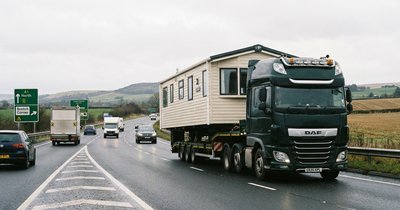
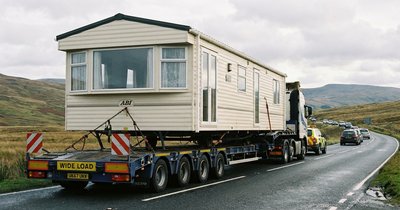
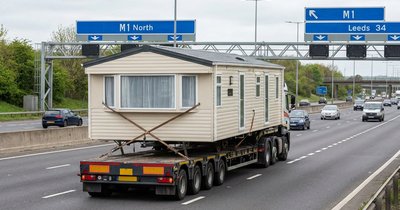
Here is the part almost no comparison guide covers. Your static caravan policy insures a structure at a named park address. If you relocate to another park, move the caravan to private land, or sell it to a buyer three counties away, the caravan spends a day as an abnormal load on the back of a low-loader — and your pitch-based policy was not designed for that.
Your policy probably doesn’t cover transit by default
Standard static caravan policies focus on fixed-location risks, and cover during a move is not automatic. Specialist insurers Ripe and Lifesure both advise the same thing: speak to your insurer before the move. Ask three specific questions — is the caravan covered in transit, is it covered at the new address from day one, and does cover continue if it sits disconnected in storage between pitches? Get the answers in writing. Moving without telling your insurer can also invalidate the cover you do have.
The transporter’s liability is capped — and it’s lower than you think
“The mover’s insurance will cover it” is the assumption that costs people money. Most UK hauliers operate under the RHA Conditions of Carriage 2020, which limit the carrier’s liability to £1,300 per tonne of goods unless a higher figure is agreed in advance. A typical static caravan weighs 3–4 tonnes, so standard-conditions liability tops out around £3,900–£5,200 — against a caravan that may be worth £25,000–£60,000. That is liability cover based on weight, not insurance of your caravan’s value. (For cross-border moves to Europe, the CMR Convention applies a similarly weight-based international cap.)
What closes the gap is goods-in-transit insurance — a policy the transporter holds that covers the load itself. Reputable static caravan movers carry it, but the sum insured varies. Before booking, ask for the transporter’s goods-in-transit certificate and check the per-load limit against your caravan’s full replacement value. A £10,000 goods-in-transit limit on a £30,000 caravan leaves you £20,000 exposed, exactly when the caravan is at its highest risk. If neither your insurer nor the transporter can cover the full value, standalone transit cover for the move is the remaining option.
This is one line item in a bigger picture: a professional relocation involves police notification, escort vehicles, and crane work, as our guide to how to move a static caravan walks through step by step. And the insurance questions above belong on the same checklist as price — our static caravan transport cost breakdown shows how transit insurance fits alongside haulage, escorts, and siting fees in a properly itemised quote.
How to Compare Static Caravan Insurance Quotes Like-for-Like
Cheapest premium wins is the wrong game — a cheap static caravan insurance quote usually gets cheap by cutting one of the items below. Compare on payout terms first, price second. Work through this checklist for every quote:
- Same cover basis — never compare a new-for-old quote against a market value quote; check the age limit applies to your caravan
- Same sum insured — full replacement cost for new-for-old, realistic current value for market value
- Public liability — meets or exceeds your park’s minimum
- Excess — compulsory plus voluntary, and any separate (often higher) flood or storm excess
- Unoccupancy conditions — most policies require winter drain-down of the water system; miss it and an escape-of-water claim fails
- Flood cover — included, excluded, or excessed, especially on coastal parks
- Letting cover — declared and included if you rent the caravan out
- Extras — decking, verandas, sheds, and contents limits that match reality
- Transit and re-siting — what happens if the caravan ever has to move
On where to compare: the big comparison sites list static caravan policies, but much of this market sits with specialist brokers and insurers (Leisuredays, Compass, Ripe, and others) whose policies don’t all appear on aggregators. Getting two or three specialist quotes alongside any comparison-site results, with the checklist above open in front of you, is the honest version of “comparing the market”.
Static Caravan Insurance FAQs
Is static caravan insurance a legal requirement?
No. Unlike car insurance, there is no legal obligation. But almost every holiday park requires it as a condition of your pitch licence agreement and asks for annual proof, so in practice you need it.
Do I have to buy my park’s insurance scheme?
No. Parks can set a minimum standard of cover, but they cannot force you into their block scheme. You can insure independently and provide proof — though check whether your park charges an administration fee to verify outside policies.
Does home insurance cover a static caravan?
No. A home buildings or contents policy does not extend to a static caravan on a holiday park. You need a dedicated policy.
Is my static caravan insured while it’s being transported?
Usually not automatically. Confirm transit cover with your insurer before any move, and check the transporter’s goods-in-transit insurance covers your caravan’s full value — standard haulage liability is capped around £1,300 per tonne, a fraction of what most statics are worth.
How much is static caravan insurance per year?
Roughly £150–£400 for most owners, with published averages between £121 and £300. Value, cover basis, park location, and letting use drive the differences.
Moving Your Caravan? Sort the Transport Alongside the Insurance
If the reason you are reviewing your insurance is an upcoming relocation, the insurance questions and the transport questions belong in the same conversation. A good static caravan transport firm will show you its goods-in-transit certificate without being chased, tell you what its liability covers, and itemise transit insurance in the quote instead of burying it.
We can’t arrange your insurance — but we can get your move priced. Post your job once and compare quotes from transporters who specialise in static caravan moves, then put their goods-in-transit limits side by side the same way you just compared policies.